AI Machine Versus Human Intelligence the 2025 Showdown
Explore the impending clash between artificial intelligence and human intellect in the anticipated 2025 showdown. What will this technological battle mean for society?
By Andrew Pyle
Imagine a world where the boundaries between human intellect and technology blur—where an ai machine can rival the capabilities once thought unique to our minds. In 2025, this scenario could become reality. This article dives into the anticipated showdown between artificial intelligence and human intelligence, examining their unique strengths, limitations, and the consequences for society. We will compare cognitive prowess, creativity, decision-making, and real-world influence, while also addressing ethical and societal concerns. As the rapid rise of AI transforms industries, understanding these differences is crucial for everyone. Read on to see how this rivalry may reshape our future.
Defining Intelligence: AI Machines vs. Humans
Understanding the nature of intelligence is crucial as we compare humans and AI machines in 2025. Both forms of intelligence have unique strengths and limitations, shaping how they interact and compete in our rapidly evolving world.
What is Human Intelligence?
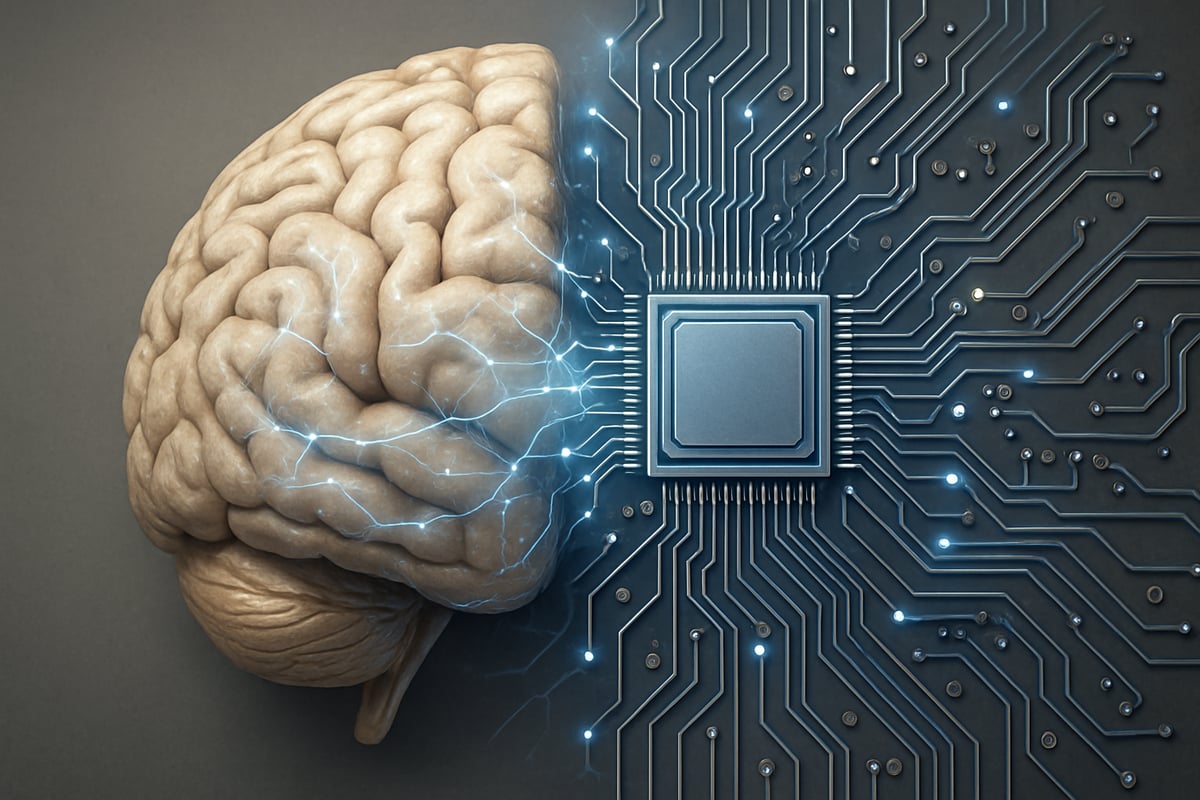
Human intelligence encompasses a complex blend of cognitive abilities. Reasoning, learning, and memory are foundational, allowing people to solve problems, adapt, and acquire new knowledge. Emotional intelligence sets humans apart, enabling empathy, communication, and collaboration.
Humans excel in ambiguous situations, leveraging intuition and adaptability that no ai machine can authentically replicate. Creativity and abstract thinking drive innovation, art, and leadership. The biological structure of the brain—with approximately 86 billion neurons—enables this remarkable cognitive flexibility.
Key traits of human intelligence include:
- Reasoning and problem-solving in dynamic environments
- Emotional awareness and understanding others’ perspectives
- Creativity and innovation, from art to scientific discovery
- Adaptability to new cultures, languages, and challenges
- Collaboration and social intelligence in group settings
For example, a human leader navigating a crisis draws on intuition, emotional insight, and abstract thinking. These attributes remain deeply rooted in the brain’s neuroplasticity, supporting lifelong learning.
What is AI Machine Intelligence?
AI machine intelligence refers to systems engineered to mimic or surpass specific human cognitive functions. Powered by machine learning, deep learning, and neural networks, an ai machine can process massive datasets at speeds far beyond human capability. These systems excel in pattern recognition, prediction, and automation.
A modern ai machine can analyze millions of data points in seconds, enabling breakthroughs in fields like medical diagnostics and creative content generation. Generative models such as Luma Dream Machine showcase how AI can produce original images and ideas. However, AI still lacks consciousness, genuine intuition, and true understanding.
Key attributes of AI machine intelligence:
- Superhuman speed in data analysis and computation
- Pattern recognition across vast, complex datasets
- Automation of repetitive or data-heavy tasks
- Advanced prediction and recommendation capabilities
- Dependence on training data and algorithms
Despite impressive progress, an ai machine cannot experience emotion or self-awareness. For a foundational overview, see this Beginner's guide to AI and machine learning
Today’s leading AI models, such as GPT-4, contain over a trillion parameters, enabling feats unimaginable just a few years ago. Yet, their intelligence remains fundamentally different from the human mind, shaped by algorithms rather than biology.
The Evolution of AI Machines: 2020–2025
The past five years have witnessed an extraordinary leap in the development of the ai machine. As we approach 2025, the pace of innovation is accelerating, with new technologies reshaping how we think about intelligence and automation.
Breakthroughs in AI Technology
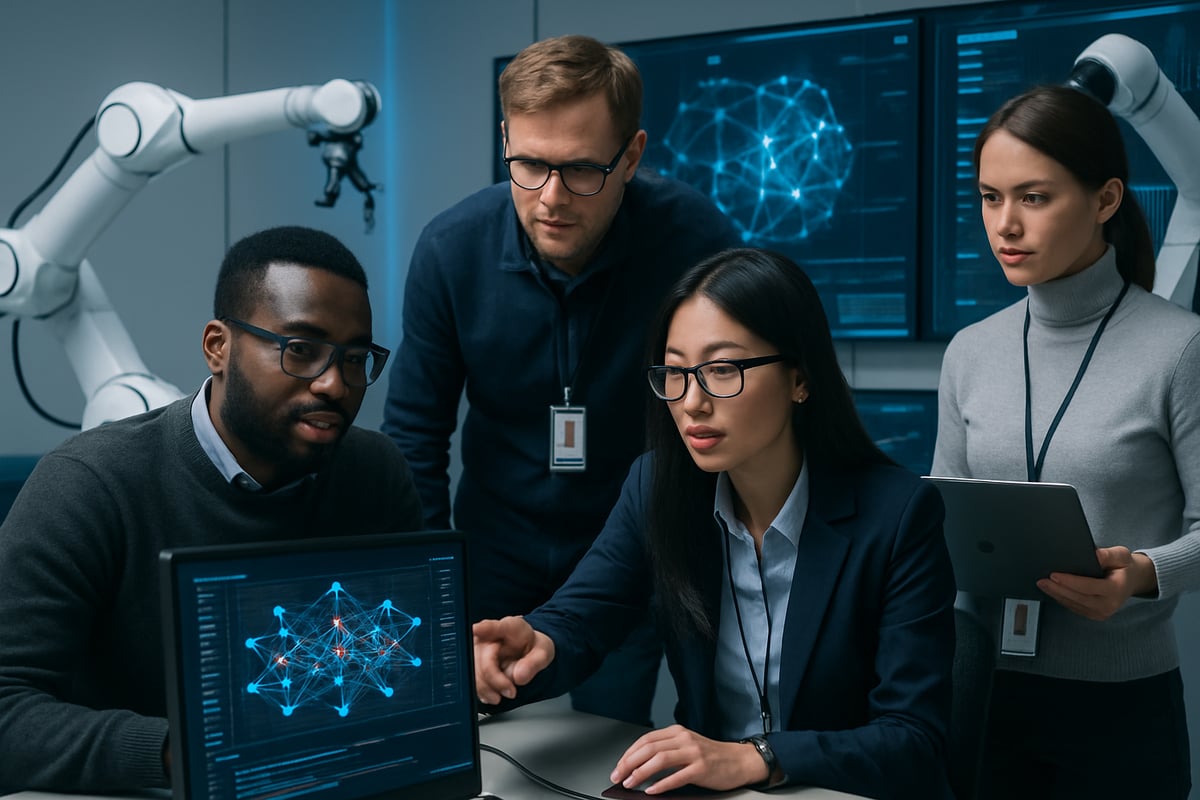
From 2020 to 2025, the ai machine has undergone a series of game-changing advancements. Generative AI models—such as Luma Dream Machine, Ray2, and Photon—now produce high-resolution images and videos at speeds eight times faster than their predecessors.
Natural language processing has advanced rapidly. Modern ai machine systems can interpret, generate, and summarize human language with remarkable fluency. Visual recognition has also improved, enabling machines to identify objects, scenes, and even subtle patterns in images and videos.
One standout feature is the rise of multimodal AI. These systems seamlessly combine text, image, and video comprehension, allowing the ai machine to follow complex, detailed instructions across formats. For example, an ai machine can analyze a medical image, interpret a doctor's notes, and generate a patient summary in seconds.
Real-world deployment has expanded dramatically. In healthcare, ai machine tools assist with diagnostics and personalized care. In finance, they power fraud detection and real-time trading. The creative sector has been revolutionized by ai machine-driven brainstorming and content generation, with platforms like Luma Dream Machine enabling artists and marketers to explore new creative frontiers.
Key Milestones and Limitations
Several major milestones have marked the evolution of the ai machine. The release of OpenAI GPT-4, Luma Photon, Ray2, and Microsoft Azure AI Foundry set new standards for performance and versatility. These systems have begun to surpass humans in specific benchmarks, especially in image and video generation quality.
For example, recent models have demonstrated the ability to process millions of data points in a fraction of the time required by human experts. According to AI surpasses humans in key benchmarksthematics, language understanding, and image recognition, achieving up to 99% accuracy in some tasks.
Despite these advancements, the ai machine faces persistent limitations. Bias and lack of explainability remain significant hurdles. While the ai machine excels at pattern recognition and automation, it struggles with generalization to novel scenarios and still lacks consciousness or intuition.
Another challenge is the ai machine's ongoing need for massive datasets and substantial computational resources. Training and deploying advanced models require significant investment in infrastructure, which can limit accessibility for smaller organizations.
Industry data indicates that the ai machine can reduce development cycles by up to 75%. Yet, the journey toward general intelligence is ongoing. The next phase will depend on addressing current limitations, ensuring ethical use, and integrating the ai machine more effectively into human workflows.
Comparing Cognitive Strengths: AI Machines vs. Human Minds
The cognitive rivalry between humans and the ai machine is reshaping how we define intelligence in the modern era. Understanding where each excels—and where their limits lie—helps us see the bigger picture of their coexistence. Let’s break down these strengths and differences.
Speed, Scale, and Accuracy
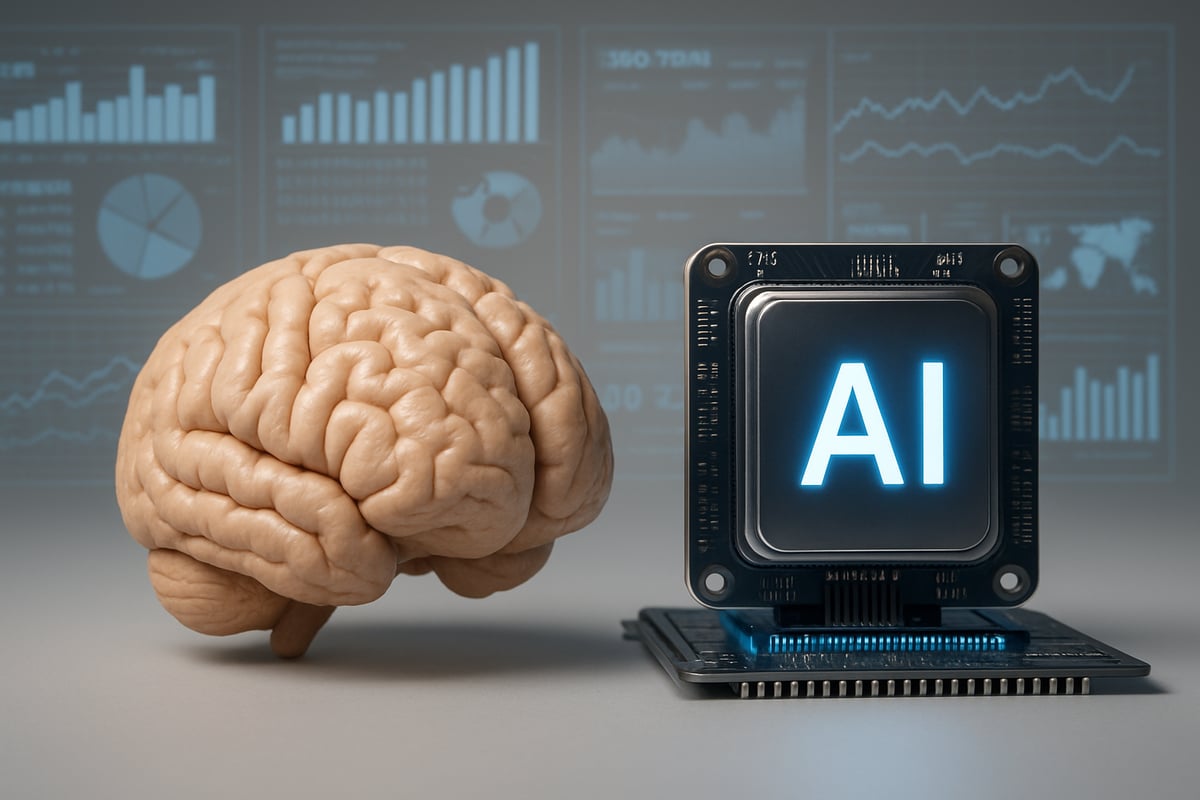
When it comes to raw processing power, the ai machine stands apart. AI models can analyze massive datasets, identify patterns, and deliver results in seconds. Humans, though brilliant, face natural limitations in memory and calculation speed.
| Aspect | Human Mind | AI Machine |
|---|---|---|
| Processing | Sequential, slower | Parallel, ultra-fast |
| Memory | Limited, fallible | Vast, precise |
| Scale | Individual experience | Massive datasets, global scope |
| Accuracy | Prone to bias/error | High consistency (with quality data) |
For example, an ai machine in medical diagnostics can scan millions of records to detect anomalies faster than a team of physicians. In finance, AI algorithms forecast trends using more data than any human could process. A recent statistic highlights this advantage: the ai machine can process millions of data points in seconds, whereas humans would need hours or days.
Adaptability and Generalization
Humans excel at adapting to new, ambiguous, or rapidly changing environments. The human mind can learn new languages, embrace shifting social cues, and navigate cultures with ease. The ai machine, while powerful, often struggles when faced with unfamiliar scenarios or out-of-distribution data.
Consider someone moving to a new country. A human can pick up local customs and learn the language through immersion and intuition. An ai machine, on the other hand, may falter if its training data doesn’t cover these new contexts.
- Humans adapt in real time, even with incomplete information.
- The ai machine excels in structured, predictable environments.
- Generalization remains a challenge for most current AI systems.
This adaptability gap defines a crucial boundary between human intelligence and the ai machine’s capabilities.
Creativity and Innovation
Creativity is where the human mind often shines, generating novel ideas, artistic works, and paradigm-shifting innovations. Yet, the ai machine is making headlines with its generative abilities. AI can now produce unique images, compose music, and even write stories. Tools like Luma Dream Machine demonstrate how an ai machine can brainstorm and visualize concepts at scale.
However, AI’s creativity is rooted in its training data. It lacks intrinsic motivation and genuine inspiration. While it can remix and generate, it doesn’t experience the “aha” moments that drive human progress. For a deeper dive into this topic, see AI basics explained: creativity
In summary, the ai machine can enhance creative workflows, but the spark of true innovation remains a human hallmark.
Emotional Intelligence and Social Cognition
Humans possess a remarkable ability to perceive, interpret, and respond to emotions. Social intelligence involves empathy, nuanced communication, and collaboration—skills deeply embedded in our biology.
The ai machine has made strides in natural language understanding and sentiment analysis. Chatbots can detect tone and respond politely, but their empathy is simulated rather than felt. For instance, AI-driven customer service can handle routine queries, but complex emotional support still requires human therapists.
- Human emotional intelligence is intuitive and genuine.
- The ai machine can recognize and mimic emotions, but not experience them.
- Social cognition is an evolving frontier for future AI development.
This distinction highlights why certain roles—like leadership or counseling—remain dominated by humans, not the ai machine.
Decision-Making and Ethics
Decision-making is a complex interplay of logic, intuition, morality, and experience. Humans rely on ethical frameworks and gut instincts to navigate ambiguous situations. The ai machine, in contrast, operates on data-driven, rule-based logic.
While the ai machine can optimize for efficiency, it may inadvertently reinforce bias or produce unintended consequences if its data is flawed. For example, AI in hiring can streamline candidate selection but risks perpetuating existing biases without human oversight.
- Humans integrate values, context, and empathy into decisions.
- The ai machine delivers consistency and objectivity, but lacks intuition.
- Ethical dilemmas often require human judgment beyond algorithmic rules.
As AI systems take on more decision-making roles, the balance between machine logic and human ethics will become even more critical.
Real-World Applications: Collaboration and Competition
The ai machine revolution is no longer a distant vision—it’s unfolding in businesses, classrooms, studios, and hospitals around the globe. As these technologies mature, the interplay between ai machine capabilities and human expertise is reshaping how we work, create, and solve problems. This section explores where ai machine excels, where human strengths remain vital, and how the two intersect to drive progress.
AI Transforming Industries
Across sectors, the ai machine is driving unprecedented change. In healthcare, advanced diagnostics powered by ai machine systems can detect diseases earlier and personalize treatment plans. Creative industries are being revolutionized by generative tools that produce original music, videos, and images at scale. Finance has embraced ai machine-driven algorithmic trading and fraud detection, improving both speed and accuracy.
Education is also seeing transformation with personalized learning platforms adapting to each student’s needs. According to Gartner, ai machine adoption in businesses soared by 270% from 2015 to 2022, highlighting the rapid pace of change. For a deeper dive into how the ai machine is reshaping industries like manufacturing, consider the insights in How AI is reshaping manufacturing in 2025
Human-AI Collaboration
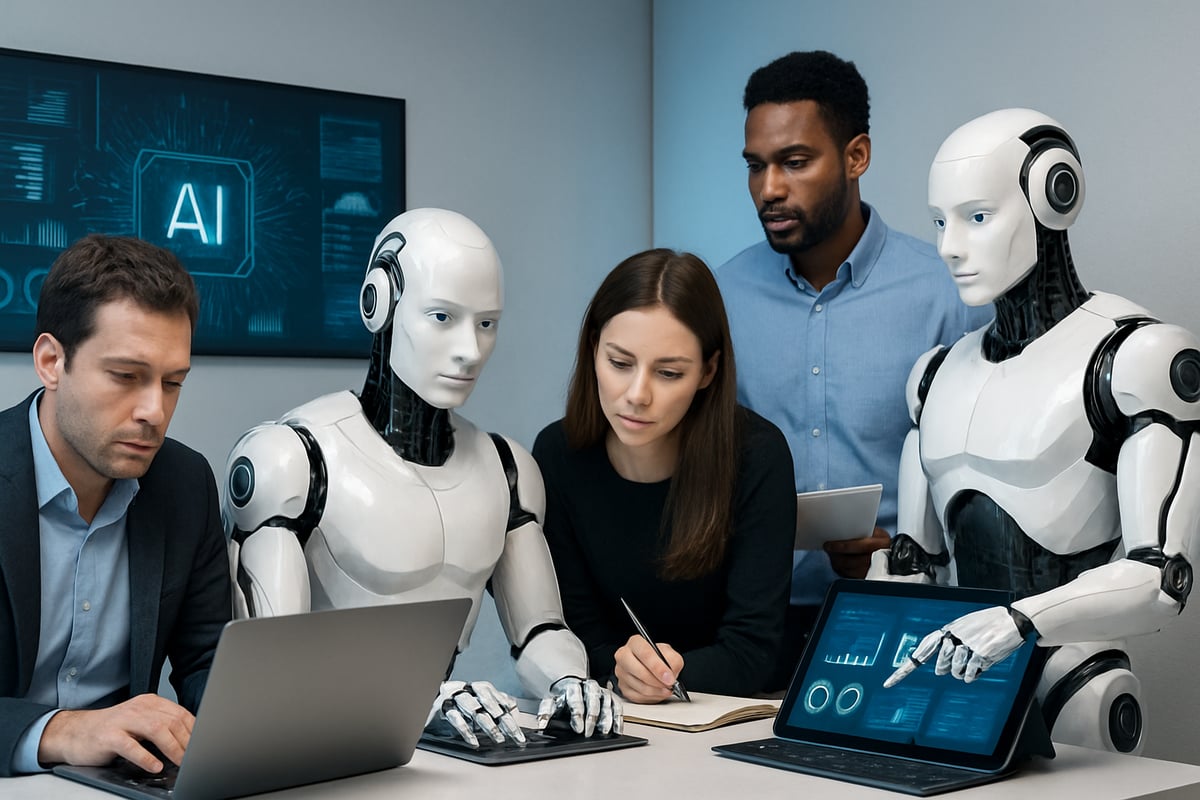
Rather than replacing humans, the ai machine is increasingly used as a collaborative partner. Developers use tools like GitHub Copilot to write code faster, while designers leverage ai machine platforms for rapid brainstorming and prototyping. In creative fields, ai machine can generate visual assets or suggest new concepts, freeing up humans to focus on big-picture ideas.
This collaboration allows teams to automate routine tasks, analyze complex datasets, and innovate more efficiently. The synergy between human intuition and ai machine analysis produces results neither could achieve alone. Human-AI teams are now standard in sectors where speed, accuracy, and creativity are essential.
Points of Competition
Despite new opportunities, the rise of the ai machine creates competition for some roles. Repetitive or highly analytical jobs—such as data entry, quality control, or routine financial analysis—are increasingly automated by ai machine solutions. This trend puts certain jobs at risk, prompting concerns about workforce displacement.
However, humans maintain a distinct edge in areas requiring leadership, empathy, and complex negotiation. For example, while ai machine can generate creative content, traditional creative teams often bring deeper cultural understanding and emotional nuance. The balance between automation and uniquely human skills continues to evolve.
Societal Impact and Challenges
The widespread adoption of ai machine technologies is shifting the skills required in the workforce. Employees must adapt, upskill, and embrace lifelong learning to stay relevant. Organizations are investing in training programs to help teams work effectively alongside ai machine tools.
Concerns persist about job displacement, the digital divide, and ethical dilemmas related to bias or transparency. Addressing these challenges requires collaboration between industry, government, and education. By fostering responsible development and inclusive access, society can ensure that the ai machine serves as a catalyst for positive change.
The 2025 Showdown: Key Scenarios and Predictions
As we approach 2025, the competition and collaboration between human intelligence and the ai machine are reaching a pivotal moment. The future will be shaped by the strengths, limitations, and evolving relationship between these two forms of intelligence.
YouTube Video
</div>
AI Surpassing Human Abilities: Where and How?
By 2025, the ai machine is set to outperform humans in domains that demand speed, data analysis, and pattern recognition. For example, AI-generated videos and images created by systems like Ray2 now surpass human capabilities in terms of consistency and speed. Recent benchmarks reveal that some ai machine models achieve up to 99% accuracy in image recognition tasks, far exceeding average human performance.
The ai machine also excels in content generation, automating complex tasks in minutes that previously required teams of experts. As discussed in the Comparative analysis of AI and human cognitionnd analytical work. The impact of the ai machine is especially evident in industries where processing vast datasets is critical.
Where Humans Still Lead
Despite the rapid progress of the ai machine, there remain areas where humans hold a decisive advantage. Complex and abstract decision-making in uncertain environments, emotional intelligence, and moral reasoning remain difficult for AI to replicate. Humans excel at interpreting nuance, adapting to unexpected scenarios, and making value-driven choices.
Creative leaps and paradigm-shifting innovations are still primarily the domain of human minds. While the ai machine can generate new content, it lacks intrinsic motivation and the ability to create meaning from lived experience. This enduring edge ensures that human intelligence continues to play a vital role in shaping the future.
Hybrid Intelligence: The New Paradigm
The most promising scenario for 2025 is not competition, but collaboration. Hybrid intelligence—where humans and the ai machine work together—often leads to superior outcomes. In creative projects, for instance, AI can generate rapid visual prototypes while humans provide direction, context, and emotional resonance.
| Capability | Human Intelligence | AI Machine | Hybrid Team |
|---|---|---|---|
| Creativity | High (abstract, novel) | High (pattern-driven) | Maximum (synergistic) |
| Speed | Moderate | Exceptional | Enhanced |
| Emotional Insight | Deep | Limited | Balanced |
As Generative AI transforming innovationmachine augments human strengths, opening possibilities for industries from healthcare to entertainment.
Risks and Ethical Considerations
With the rise of the ai machine, new risks and ethical questions emerge. Deepfakes, misinformation, and the challenge of trusting AI-generated content are pressing concerns. Bias in training data and lack of transparency in decision-making remain unresolved, raising questions about fairness and accountability.
Regulatory frameworks are struggling to keep pace with the rapid evolution of the ai machine. Ensuring responsible development and deployment requires cooperation among governments, industry leaders, and civil society to safeguard against unintended consequences.
Societal Readiness and Adaptation
Society's ability to adapt to the ai machine revolution will determine how successfully we navigate this new era. Key factors include:
- Building public trust in AI systems through transparency.
- Expanding AI literacy and education for all age groups.
- Developing policies that address workforce transitions and upskilling.
- Supporting responsible adoption frameworks to guide ethical AI use.
As the ai machine becomes more integrated into daily life, preparing individuals and organizations for ongoing change is imperative. The future belongs to those who can harness both human and machine intelligence for the greater good.
Ethical, Social, and Philosophical Implications
As the ai machine continues its rapid evolution, society faces fundamental questions about ethics, social structures, and the very nature of intelligence. This section explores how the growing capabilities of ai machine redefine human value, challenge traditional norms, and create new opportunities and risks for our future.
Redefining Intelligence and Value
The rise of the ai machine forces us to reconsider what intelligence truly means. While humans excel in consciousness, free will, and abstract reasoning, ai machine systems demonstrate remarkable speed and accuracy but lack genuine understanding and self-awareness. This philosophical debate—centered on the "hard problem" of AI—raises questions about the intrinsic value of human cognition.
For example, the biological basis of human intelligence, rooted in emotion and creativity, contrasts sharply with the data-driven logic of ai machine. This distinction is explored in depth in AI's limitations compared to human cognitionfe, individuals may need to reassess their roles and sense of self-worth in a world where machines share the stage.
Equity and Access
The proliferation of ai machine technologies introduces both opportunities and risks regarding equity. Not everyone enjoys equal access to advanced tools, leading to a widening digital divide between those who can leverage ai machine for growth and those left behind.
Efforts to democratize creative expression—such as platforms powered by Luma Dream Machine—are promising steps toward inclusivity. However, challenges remain in ensuring fair access to ai machine education and resources across regions and socioeconomic backgrounds. The global interplay between ai machine, digitalization, and international trade is examined in AI's role in digitalization and tradee disparities is crucial for building an equitable AI-driven society.
Regulation and Governance
As ai machine capabilities expand, robust regulation and governance become increasingly vital. Governments, industry leaders, and civil society must collaborate to create frameworks that protect rights, foster innovation, and ensure ethical development.
Recent initiatives, such as the EU AI Act and U.S. AI Bill of Rights proposals, aim to address complex issues like bias, transparency, and accountability in ai machine deployment. These regulatory efforts are essential for balancing progress with public trust. The ongoing challenge is to craft policies that adapt to rapid technological change while safeguarding fundamental values.
The Road Ahead: Preparing for the AI-Human Future
Preparing for a future shaped by ai machine requires proactive strategies from both individuals and organizations. Upskilling, fostering ethical awareness, and embracing adaptability are crucial steps to remain relevant in an AI-augmented world.
Lifelong learning and cross-sector collaboration will enable society to harness the strengths of ai machine while mitigating its risks. By prioritizing responsible, human-centric AI, we can ensure that technological progress enhances—rather than diminishes—our collective well-being. The imperative is clear: embrace the promise of ai machine while navigating its ethical and social complexities with care.<br><br>As we’ve seen, the balance between AI machine intelligence and human ingenuity is rapidly evolving—and understanding this dynamic is essential for anyone navigating the future of work, creativity, and ethical decision-making. If you’re ready to deepen your understanding and see firsthand how AI can empower your professional journey, you don’t have to wait. We make it easy to access clear explanations, practical examples, and actionable insights tailored for real-world impact. Start Learning Todayring the intersection of human and artificial intelligence.