The Expert Guide to AI and ML for 2026 Innovators
By Andrew Pyle
Artificial intelligence and machine learning are reshaping the world at an astonishing pace. As we approach 2026, breakthroughs in ai and ml are transforming how businesses operate, innovate, and compete.
This expert guide is designed for innovators ready to master the evolving landscape. Whether you lead a forward-thinking organization or aim to stay ahead professionally, you will find a roadmap packed with practical strategies.
Explore the fundamentals, discover 2026 trends, learn proven adoption steps, tackle ethical challenges, and see real-world use cases. Start your journey to unlock strategic advantages with actionable insights tailored for the future.
Understanding AI and ML: Foundations for 2026 Innovators
Artificial intelligence and machine learning are transforming how organizations innovate. As we approach 2026, understanding the foundations of ai and ml is essential for leaders and professionals aiming to drive meaningful change. This section explores key definitions, recent milestones, the strategic value of these technologies, common misconceptions, and the evolving ecosystem shaping the future.

Defining Artificial Intelligence and Machine Learning
Artificial intelligence (AI) refers to systems that mimic human cognitive functions, such as learning, reasoning, and problem-solving. Machine learning (ML), a subset of AI, is focused on algorithms that enable computers to learn from data and improve over time. Key concepts within ai and ml include supervised learning (where models learn from labeled data), unsupervised learning (identifying patterns in unlabeled data), and reinforcement learning (learning through trial and feedback).
In 2026, technologies like generative AI and autonomous systems will rely on these foundational methods. According to Gartner’s 2023 report, 70% of enterprises are piloting or adopting ai and ml solutions. Data and algorithms are at the heart of these advances. For a detailed comparison of AI, ML, and human intelligence, see AI versus human intelligence
Key Milestones and Recent Breakthroughs
The period from 2020 to 2025 has seen rapid progress in ai and ml. Milestones include the launch of GPT-4 and Gemini, which pushed the boundaries of natural language processing and multimodal capabilities. Edge AI brought intelligence to IoT and mobile devices, making real-time decisions possible outside centralized data centers.
Open-source models have democratized access, enabling more organizations to experiment and innovate. The Stanford AI Index 2024 highlights a fourfold increase in published AI research since 2020, underscoring the explosive growth of the field. These breakthroughs continue to shape the trajectory of ai and ml, setting the stage for even greater advancements by 2026.
Why AI and ML Matter for Innovators
For innovators, the adoption of ai and ml unlocks significant competitive advantages. Automation streamlines operations, personalization enhances customer experiences, and predictive analytics drives smarter decisions. According to McKinsey’s 2024 report, ai and ml could contribute up to $13 trillion to the global economy by 2030.
Organizations are leveraging ai and ml in product development, customer service, and supply chain optimization. Examples include AI-powered product recommendations, advanced fraud detection in financial services, and real-time supply chain analytics. These applications demonstrate the transformative potential of ai and ml across industries.
Common Myths and Misconceptions
Despite rapid adoption, several myths surround ai and ml. Some believe that AI will fully replace humans, or that machine learning requires massive datasets only available to tech giants. Others assume ai and ml are too complex for most organizations.
In reality, ai and ml augment human capabilities, not replace them. Many modern algorithms can operate effectively with smaller, high-quality datasets. The collaborative potential between humans and AI is immense, enabling organizations of all sizes to innovate responsibly and effectively.
The Evolving AI/ML Ecosystem
The ai and ml landscape in 2026 is diverse and dynamic. Startups, established tech giants, and open-source communities are all contributing to the pace of innovation. Key platforms like TensorFlow, PyTorch, and Hugging Face, as well as new low-code tools, make ai and ml more accessible than ever.
There is also a growing emphasis on education and upskilling, with more professionals seeking to understand and apply ai and ml in their fields. This evolving ecosystem ensures that knowledge and resources are available to a broader audience, fueling the next wave of innovation.
The 2026 AI & ML Innovation Landscape: Trends, Technologies, and Opportunities
The ai and ml landscape in 2026 is evolving rapidly, presenting innovators with unprecedented opportunities and new challenges. Staying ahead requires a clear understanding of the key trends, disruptive technologies, and practical implications shaping the future. This section explores the essential shifts and advancements every forward-thinking leader should know.

Emerging AI/ML Technologies for 2026
By 2026, the surge in generative ai and ml is transforming how organizations create value. Generative AI, including advances like GPT-5 and DALL-E 4, enables machines to produce text, images, video, and code with remarkable sophistication. Autonomous agents and robotics are becoming integral to sectors from logistics to healthcare, enhancing productivity and safety.
Edge ai and ml are gaining traction, pushing intelligence to IoT devices, smartphones, and embedded systems for faster decisions and lower latency. Quantum machine learning is emerging, offering early breakthroughs in optimization and cryptography. Explainable AI (XAI) is also advancing, building trust by clarifying decision processes.
For a deeper dive into these innovations, explore Generative AI techniques and applications
Industry-Specific Applications and Disruptions
ai and ml are disrupting industries on a massive scale. In healthcare, machine learning powers diagnostics, drug discovery, and virtual care, driving more accurate and personalized treatment. The finance sector leverages ai and ml for algorithmic trading, risk assessment, and fraud prevention, reducing losses and improving compliance.
Manufacturing benefits from predictive maintenance and process automation, resulting in higher uptime and quality. Retailers use ai and ml for personalized marketing, inventory optimization, and seamless customer experiences. According to Deloitte’s 2025 research, 80% of enterprises are investing in industry-specific AI solutions to maintain a competitive edge.
Democratization and Accessibility of AI/ML
The democratization of ai and ml is reshaping who can innovate. The rise of low-code and no-code platforms empowers non-technical users to build and deploy AI solutions, accelerating adoption across small and medium enterprises. Cloud-based AI services from AWS, Azure, and Google Cloud make advanced capabilities accessible without significant upfront investment.
Open-source models and vibrant community-driven innovation are fueling rapid advancement. As ai and ml become more accessible, a broader range of organizations can experiment, iterate, and scale impact.
Data, Privacy, and Security Trends
Data-centric ai and ml are central to success in 2026. High-quality data, synthetic data generation, and automated labeling tools are driving better model performance. Privacy-preserving techniques such as federated learning and differential privacy are essential, especially as regulations like the EU AI Act reshape compliance requirements.
AI-driven cybersecurity solutions are vital for threat detection and response, protecting critical infrastructure. Innovators must prioritize secure data management and stay current with evolving global regulations to maintain trust and mitigate risks.
Challenges and Limitations Facing Innovators
Despite the promise of ai and ml, innovators face persistent challenges. Access to quality data, talent shortages, and high compute costs remain significant barriers. Model bias and the need for explainability complicate deployment, while ethical concerns demand careful oversight.
Integrating ai and ml with legacy systems can slow progress. Failures often result from biased data or lack of transparency, underscoring the need for robust governance. Addressing these limitations is crucial for sustainable, responsible innovation.
Step-by-Step Guide to Adopting AI and ML in Your Organization
Adopting ai and ml is a journey that requires vision, structure, and a deep understanding of your organization’s unique needs. This guide walks you through each critical stage so you can unlock real business value and future-proof your operations.
Assessing Readiness and Defining Objectives
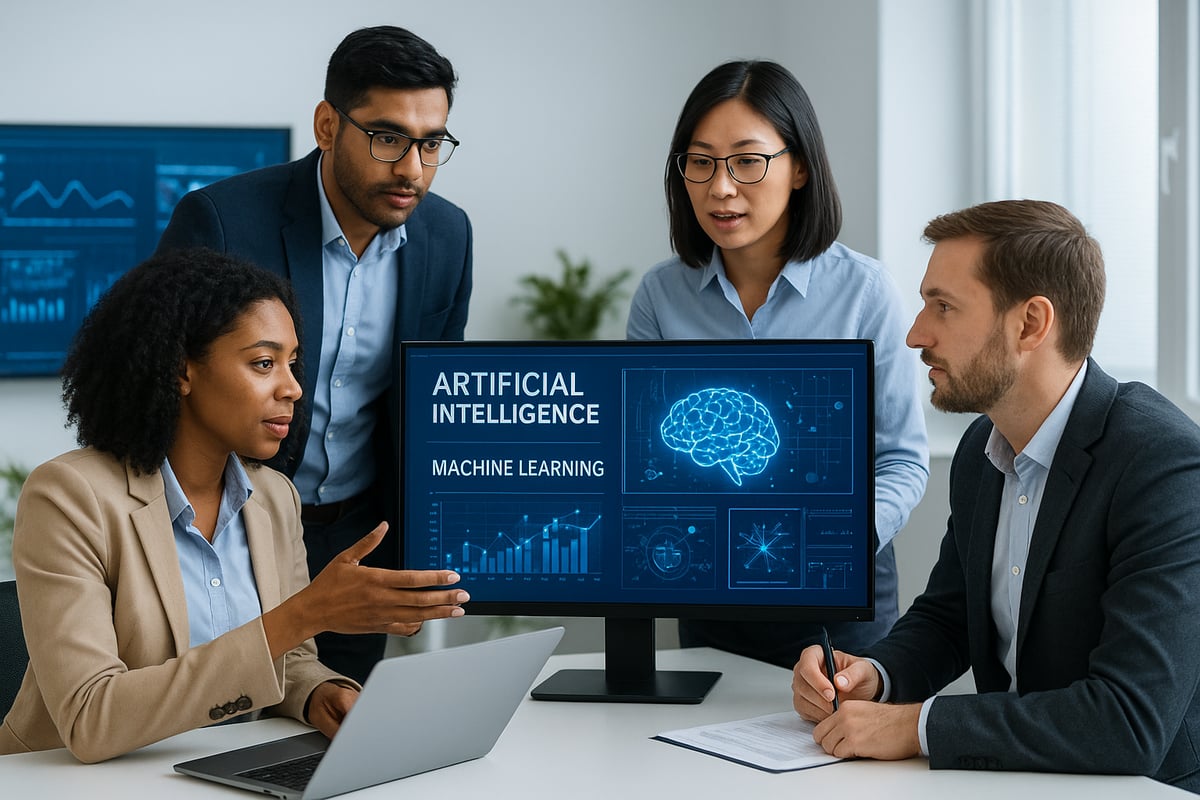
Before diving into ai and ml implementation, assess your organization's digital maturity and clarify your objectives. Start by evaluating current capabilities, technological infrastructure, and data readiness. Engage stakeholders across departments to identify business pain points that ai and ml can address.
- Conduct a thorough AI/ML maturity assessment.
- Define measurable business goals, such as improving customer service or streamlining operations.
- Align your ai and ml strategy with the overall organizational vision and growth roadmap.
For example, a mid-sized retailer might target personalized promotions or inventory optimization as primary objectives. By mapping goals to business outcomes, organizations set a strong foundation for successful ai and ml initiatives.
Building the Right Team and Skills
A successful ai and ml journey depends on assembling a multidisciplinary team. Core roles include data scientists, machine learning engineers, domain experts, and AI product managers. Upskilling existing staff and fostering cross-functional collaboration are vital steps.
- Identify skill gaps and provide targeted training.
- Encourage continuous learning and knowledge sharing.
- Consider partnerships with external experts or platforms for specialized tasks.
According to IBM’s 2024 survey, 64% of organizations cite talent shortages as a major barrier to ai and ml adoption. Supporting this, the McKinsey's 2024 AI Adoption Surveyng the right team ensures your ai and ml projects are both innovative and sustainable.
Data Strategy: Collection, Preparation, and Management
Data is the lifeblood of ai and ml success. Prioritize data quality, governance, and accessibility from the start. Develop robust processes for acquiring, cleaning, labeling, and augmenting data.
- Set up automated data pipelines for seamless data flow.
- Implement strict data governance and compliance standards.
- Use data augmentation to increase dataset diversity and boost model performance.
For example, improving data labeling accuracy can significantly enhance predictive models. A well-designed data strategy ensures ai and ml systems deliver actionable insights, while reducing risks associated with poor data quality.
# Example: Simple data pipeline for preprocessing
import pandas as pd

data = pd.read_csv('input.csv')
data = data.dropna()
data = data.apply(lambda x: x.strip() if x.dtype == "object" else x)
data.to_csv('cleaned_data.csv')
Model Selection, Training, and Evaluation
Choosing the right ai and ml models is essential. Consider whether classical machine learning, deep learning, or transfer learning best fits your use case. Focus on rigorous training, validation, and tuning to optimize results.
- Select models based on problem complexity and available data.
- Use cross-validation and hyperparameter tuning for robust performance.
- Continuously monitor model accuracy and retrain as needed.
Evaluate models using clear metrics. Here’s a quick comparison:
| Metric | Description |
|---|---|
| Accuracy | Overall correctness of the model |
| Precision | Correct positive predictions |
| Recall | Ability to find all positive cases |
| F1-score | Balance between precision and recall |
Tracking these metrics helps ensure your ai and ml solutions remain reliable and aligned with business needs.
Deployment, Integration, and Scaling
After successful training, deploy ai and ml models into production environments—whether cloud, edge, or on-premises. Integrate models with existing systems to maximize impact and streamline workflows.
- Use robust MLOps practices for deployment and monitoring.
- Plan for scaling as data volume and user demand grow.
- Regularly audit models for drift and update as needed.
According to a 2025 Gartner study, only 53% of ai and ml projects reach production, highlighting the importance of strong deployment strategies. By embedding ai and ml into core processes, organizations can unlock transformative value and stay ahead of the competition.
Navigating Ethics, Bias, and Responsible AI in 2026
As ai and ml technologies become core drivers of innovation, ethical and responsible practices are paramount. The rapid adoption of ai and ml brings transformative opportunities, but also complex challenges around fairness, trust, and societal impact. Innovators must build a foundation for responsible use, ensuring these technologies benefit individuals, organizations, and society.
Understanding AI Ethics and Societal Impact
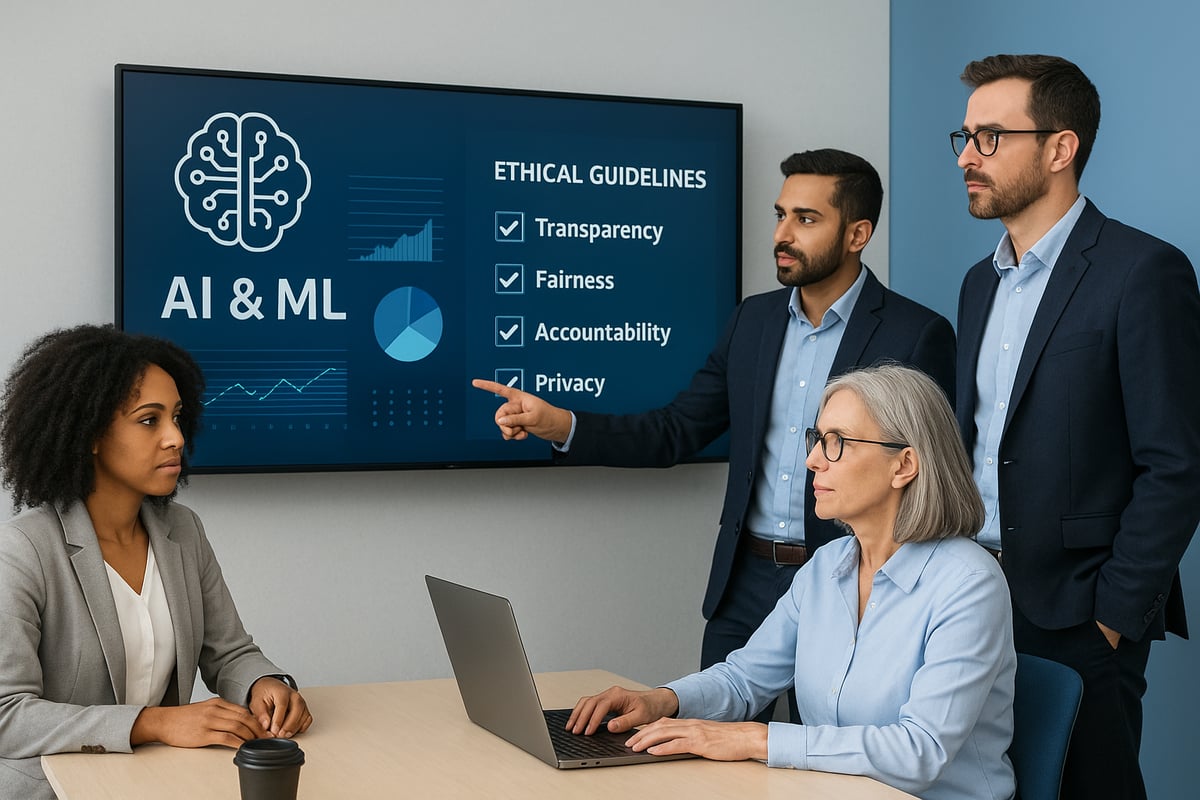
Ethics in ai and ml centers on fairness, accountability, and transparency. As these technologies influence healthcare, finance, and public decision-making, they shape how individuals experience opportunity and risk. Societal impacts range from job displacement to shifts in trust for automated systems.
Frameworks like the OECD AI Principles and the EU AI Act offer guidance on responsible development. They stress the importance of transparency and accountability throughout the ai and ml lifecycle. For a deeper exploration of these principles, see this resource on AI ethics in conversational AI
Innovators must ask: How do ai and ml systems affect people’s lives? What safeguards ensure decisions are explainable and just? These questions are central to building trust and long-term value.
Tackling Bias and Ensuring Fairness
Bias in ai and ml can arise from training data, algorithms, or human oversight. Biased models can reinforce inequalities or produce unfair results, especially in critical sectors like healthcare or hiring. Recent studies, such as one from MIT, found that 34% of AI failures were due to unaddressed bias.
Mitigating bias requires diverse, representative datasets and robust validation processes. Tools for bias detection and correction are now standard in leading ai and ml workflows. Strategies include:
- Auditing datasets for skewed representation
- Regularly testing models across demographic groups
- Engaging multidisciplinary teams for oversight
A culture of vigilance ensures that ai and ml systems serve everyone fairly.
Privacy, Security, and Regulatory Compliance
Data privacy and security are at the heart of responsible ai and ml adoption. Regulations like GDPR, CCPA, and the emerging EU AI Act set clear expectations for data handling and user consent. Privacy-preserving techniques, such as federated learning and anonymization, help protect sensitive information while enabling ai and ml innovation.
Organizations must integrate compliance into every stage of their ai and ml projects. This includes regular audits, transparent data practices, and clear communication with users about how their data is utilized.
Security is equally crucial. AI-driven cybersecurity tools now detect threats in real time, but attackers also exploit ai and ml vulnerabilities. Continuous monitoring and layered defenses are essential to safeguard assets and maintain trust.
Building Explainable and Trustworthy AI
Explainability is vital for both user trust and regulatory standards, especially in sectors like finance or healthcare. Stakeholders need to understand how ai and ml models arrive at decisions, particularly when outcomes impact individuals’ lives.
Techniques such as SHAP, LIME, and interpretability dashboards translate complex models into understandable insights. For example, financial institutions often require transparent models to justify loan approvals or risk assessments.
Building trustworthy ai and ml means prioritizing interpretability alongside accuracy. This approach not only satisfies compliance but also strengthens user confidence in automated systems.
Fostering a Culture of Responsible Innovation
A sustainable ai and ml strategy goes beyond technical solutions. It requires a culture that values ethics, transparency, and ongoing learning. Many organizations now establish AI ethics boards and formal guidelines to oversee responsible practice.
Regular training keeps teams updated on emerging standards and risks. Open communication encourages the reporting of concerns before they escalate. Microsoft’s Responsible AI Standard is a leading example of how governance can drive ethical innovation.
Ultimately, responsible ai and ml depends on shared values, proactive leadership, and a commitment to societal good. By embedding these principles, innovators ensure technology uplifts and empowers.
Real-World Case Studies: AI and ML Innovation in Action
Explore how ai and ml are transforming industries with real-world examples that highlight innovation, measurable results, and critical lessons for 2026 innovators. Each case study demonstrates how leading organizations are leveraging these technologies to solve complex challenges and create new value.
YouTube Video
</div>
Transforming Healthcare with AI
In healthcare, ai and ml are redefining diagnostics and treatment pathways. Hospitals and clinics now rely on algorithms for early detection of diseases, improving accuracy and outcomes. For example, the Mayo Clinic uses advanced machine learning to analyze imaging data, identifying cancer at earlier stages than traditional methods.
Personalized medicine is another breakthrough. By processing patient histories and genomic data, ai and ml recommend tailored therapies, reducing trial and error in treatment. These technologies empower clinicians to focus on patient care while automating routine analysis, streamlining workflows, and supporting faster, more informed decisions.
Revolutionizing Finance and Banking
The finance sector has seen rapid adoption of ai and ml for fraud detection, risk assessment, and customer service automation. Banks deploy real-time monitoring systems that flag suspicious transactions, using pattern recognition to prevent financial crime.
JPMorgan Chase’s COiN platform leverages natural language processing to review legal documents, saving thousands of hours annually. AI-driven investment platforms now offer personalized portfolio recommendations, making sophisticated asset management accessible to more clients. These innovations improve accuracy, efficiency, and trust in financial operations.
Manufacturing and Industry 4.0
Manufacturers are integrating ai and ml to optimize production lines and maintain equipment proactively. Predictive maintenance uses sensor data to forecast machinery failures, preventing costly downtime. Siemens, for instance, applies machine learning analytics to their industrial assets, increasing operational efficiency and reducing maintenance costs.
Smart factories employ robotics and automated quality control, ensuring consistent product standards. Supply chain processes are also transformed, with real-time ai and ml insights enabling adaptive logistics and inventory management across complex networks.
AI in Retail and Customer Experience
Retailers harness ai and ml for personalized recommendations, dynamic pricing, and efficient inventory management. Amazon’s advanced logistics system uses these technologies to optimize delivery routes and stock levels, ensuring fast, reliable service for millions of customers.
Chatbots and virtual assistants powered by ai and ml enhance customer support, resolving inquiries around the clock. For a closer look at practical deployments, Generative AI in real-world case studiese, driving both efficiency and customer satisfaction.
Lessons Learned and Best Practices
Successful ai and ml initiatives share common factors: clear objectives, high-quality data, and strong stakeholder engagement. Organizations that foster collaboration and invest in upskilling are more likely to achieve sustained impact.
However, pitfalls such as lack of governance or underestimating integration challenges can derail projects. Insights from McKinsey's 2025 AI in the Workplace Reportovators to navigate the evolving landscape with confidence.
The Future of AI and ML: Preparing for What’s Next
The future of ai and ml is unfolding at an unprecedented pace. Innovators must stay agile to harness the full potential of these technologies. As we look toward 2026 and beyond, anticipating key shifts, building organizational resilience, and investing in people and partnerships will be essential for sustainable success.
Anticipated Breakthroughs and Disruptive Technologies
By 2026, the ai and ml landscape will be shaped by breakthroughs that redefine what is possible. General AI capabilities will expand, enabling machines to learn across domains, adapt to complex problems, and collaborate more effectively with humans.
Multimodal learning will allow systems to process text, images, audio, and video seamlessly, transforming industries from healthcare diagnostics to entertainment. Quantum machine learning, though still in its early days, promises to accelerate data analysis and pattern recognition, opening doors to solutions previously out of reach.
The integration of 5G and 6G networks will drive real-time ai and ml applications at the edge, supporting autonomous vehicles, smart cities, and industrial automation. Next-generation collaboration tools will empower teams to co-create alongside intelligent agents, turning innovation into a collective experience.
Evolving Roles and Skills for Innovators
The rise of ai and ml is reshaping the workforce. New roles are emerging, such as prompt engineers who design queries for generative models, AI ethicists who guide responsible development, and automation strategists who optimize workflows.
Continuous upskilling is vital. Professionals must blend domain expertise with technical fluency, adapting to rapid changes. The World Economic Forum predicts that ai and ml will create up to 97 million new jobs by 2026, spanning sectors from finance to manufacturing.
Lifelong learning will become the norm. Organizations that encourage flexibility, curiosity, and collaboration will attract top talent. For individuals, mastering both hard and soft skills—such as critical thinking, communication, and data literacy—will set apart future leaders in ai and ml.
Building an AI-Ready Organization
Transforming into an ai and ml-ready organization requires more than adopting technology. It involves fostering a culture of innovation, agility, and ethical responsibility.
Leadership buy-in is crucial. Executives must champion ai and ml initiatives, align them with business goals, and allocate resources for experimentation and scale. Investing in scalable infrastructure—cloud platforms, data pipelines, and robust security—lays the foundation for sustainable growth.
Cross-functional collaboration accelerates impact. Bringing together IT, business, compliance, and operations ensures that ai and ml solutions address real-world needs. Regular feedback loops, pilot programs, and transparent communication help manage risks and drive continuous improvement. Organizations that prioritize adaptability will be best positioned to thrive as the ai and ml landscape evolves.
Collaborating with the AI Ecosystem
The rapid evolution of ai and ml calls for strategic partnerships within the broader ecosystem. Startups, academic institutions, and open-source communities contribute cutting-edge research, tools, and talent.
Engaging with accelerators and consortia fosters knowledge exchange and speeds up innovation cycles. Collaborations like those between OpenAI and Microsoft exemplify the power of pooling resources and expertise to achieve breakthroughs that no single entity could accomplish alone.
Open-source platforms lower barriers to entry, making advanced ai and ml capabilities accessible to a wider audience. By staying connected with the ecosystem, organizations can anticipate trends, access talent, and co-create solutions tailored to emerging challenges.
Measuring Impact and ROI of AI Initiatives
Quantifying the value of ai and ml investments is essential for long-term success. Key metrics include productivity gains, cost savings, revenue growth, and enhanced customer satisfaction. Establishing clear objectives and benchmarks enables organizations to track progress and justify further investment.
Feedback loops are critical. Continuously monitoring model performance, user adoption, and business outcomes ensures that ai and ml projects remain aligned with strategic goals. According to McKinsey's 2024 AI Economic Impact Report
Case studies reveal that enterprise-wide adoption of ai and ml can boost efficiency by as much as 40 percent. Organizations must adapt their evaluation methods to capture both quantitative and qualitative benefits, ensuring continuous improvement and maximum value.
Resources for Continued Learning and Growth
Staying ahead in ai and ml requires ongoing education and connection to the latest developments. Recommended resources include:
- Online courses and certifications from platforms like Coursera, Udacity, and edX
- Leading conferences such as NeurIPS, ICML, and CVPR
- Top AI research journals: Nature Machine Intelligence, Journal of Machine Learning Research
- Active online communities: AI Alignment Forum, Hugging Face Hub, Reddit’s r/MachineLearning
- Curated newsletters and podcasts: The Batch, AI Alignment Newsletter, Data Skeptic
Investing in learning ensures that professionals and organizations remain agile, innovative, and prepared for whatever the future holds in ai and ml.<br><br>As you’ve seen, stepping confidently into the world of AI and ML requires not just knowledge of current trends, but a practical, hands-on approach to applying these technologies in real settings. Whether you’re eager to master foundational concepts, explore real-world use cases, or develop the skills needed for tomorrow’s innovations, you don’t have to embark on this journey alone. Our AI-driven learning platform is designed to make even the most complex ideas accessible and actionable for forward-thinking professionals like you. If you’re ready to transform your expertise and lead innovation in 2026, Start Learning Today