Agentic Engineering: Building AI Systems That Act
By Andrew Pyle

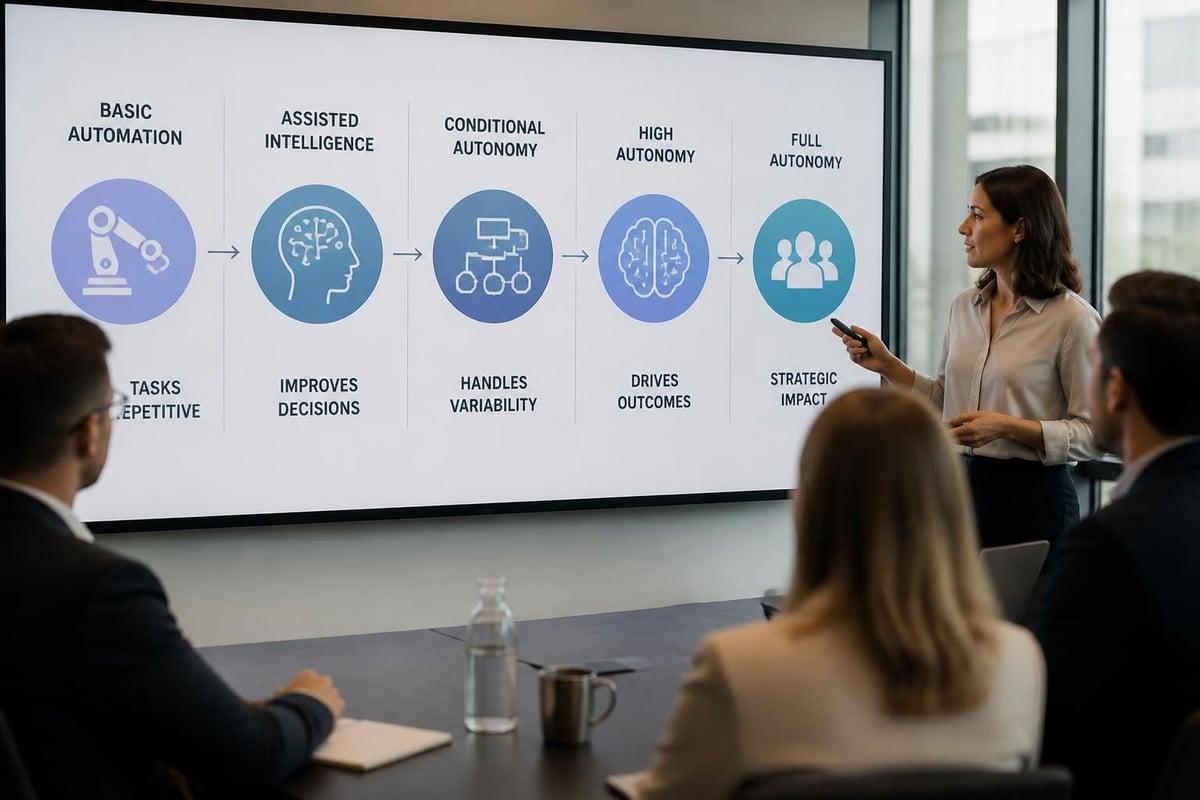
The landscape of artificial intelligence development is undergoing a fundamental transformation. Moving beyond passive AI models that simply respond to queries, engineers are now creating systems capable of independent action, goal-directed behavior, and autonomous decision making. This emerging discipline, known as agentic engineering, represents a paradigm shift in how we design, build, and deploy AI systems that can operate with minimal human intervention while achieving complex objectives across multiple domains.
Understanding the Fundamentals of Agentic Engineering
Agentic engineering involves the systematic design and development of AI agents that can autonomously pursue goals, make decisions, and take actions in dynamic environments. Unlike traditional AI systems that require explicit instructions for each task, agentic systems possess the capability to break down high-level objectives into actionable steps, execute them sequentially or in parallel, and adapt their strategies based on feedback.
This discipline draws from multiple fields including software engineering, cognitive science, robotics, and machine learning. The core principle centers on creating systems that exhibit agency: the capacity to act independently in pursuit of defined goals while navigating uncertainty and complexity.
Key Characteristics of Agentic Systems
What distinguishes agentic systems from conventional AI applications? Several defining features set them apart:
- Autonomous goal pursuit without constant human supervision
- Multi-step reasoning that chains together complex operations
- Dynamic adaptation to changing conditions and unexpected obstacles
- Tool use and integration across multiple platforms and APIs
- Decision-making capabilities based on environmental feedback
These systems move beyond simple input-output relationships. They maintain context over extended interactions, learn from outcomes, and refine their approaches to problem-solving. According to recent research on autonomous AI capabilities by handling entire workflows from start to finish.

The Technical Architecture Behind Agentic Systems
Building effective agentic systems requires a sophisticated technical foundation that goes far beyond deploying a large language model. The architecture must support perception, reasoning, planning, action execution, and learning in an integrated framework.
Core Architectural Components
The technical stack for agentic engineering typically includes several interconnected layers:
| Component | Function | Implementation Considerations |
|---|---|---|
| Perception Layer | Gathers and processes environmental data | API integrations, sensor data, user inputs |
| Reasoning Engine | Analyzes information and makes decisions | LLM-based inference, rule systems, heuristics |
| Planning Module | Develops action sequences to achieve goals | Task decomposition, dependency mapping, resource allocation |
| Execution Framework | Carries out planned actions | Tool calling, API orchestration, error handling |
| Memory Systems | Maintains context and learns from experience | Vector databases, conversation history, outcome tracking |
The perception layer serves as the agent's interface to its operating environment. This might include access to databases, web APIs, document repositories, or real-time data streams. For synthetic datasetnitor data quality metrics and identify gaps requiring attention.
Reasoning and Planning Mechanisms
The reasoning engine represents the cognitive core of agentic systems. Modern implementations leverage large language models as general-purpose reasoning engines, capable of understanding context, generating hypotheses, and evaluating potential actions. However, effective agentic engineering also incorporates structured planning algorithms that ensure coherent, goal-directed behavior.
Planning involves breaking down high-level objectives into manageable subtasks, sequencing those tasks appropriately, and allocating resources efficiently. Advanced systems employ techniques like hierarchical task networks, Monte Carlo tree search, or reinforcement learning to optimize their planning strategies over time.
Practical Applications Across Industries
Agentic engineering is already transforming business operations across numerous sectors. Organizations are deploying autonomous agents for tasks ranging from customer service to complex analytical workflows.
Enterprise Automation and Integration
Businesses are leveraging agentic systems to automate workflows that previously required extensive human coordination. These applications include:
- Customer support agents that handle inquiries end-to-end, from initial contact through resolution
- Data analysis assistants that identify trends, generate reports, and proactively flag anomalies
- Code generation and debugging systems that autonomously write, test, and refine software
- Research assistants that gather information from multiple sources and synthesize findings
One particularly compelling application involves conversational AI use cases in real estatepects through qualification processes without human intervention.
The financial services and audit sectors have seen rapid adoption of agentic AIound oversight and accountability.
Software Development and Engineering Workflows
Agentic engineering is revolutionizing how software itself gets built. AI agents now participate actively in development workflows, generating code, conducting reviews, running tests, and even deploying updates. IBM's analysis of agentic engineeringvibe coding," emphasizing the importance of rigorous engineering practices.
Development teams are integrating agents that:
- Analyze requirements and propose architectural solutions
- Generate implementation code based on specifications
- Write comprehensive test suites to validate functionality
- Identify and fix bugs through automated debugging
- Optimize performance by analyzing bottlenecks and refactoring code
This shift has profound implications for team structures and skill requirements. Engineers increasingly focus on high-level architecture and agent coordination rather than low-level implementation details.

Engineering Challenges and Best Practices
Despite its promise, agentic engineering presents significant technical and organizational challenges that teams must navigate carefully.
Reliability and Error Handling
Autonomous systems operating without constant supervision must handle errors gracefully. Robust agentic systems incorporate multiple layers of error detection and recovery:
Error Prevention Strategies:
- Input validation and sanitization
- Constraint checking before action execution
- Simulation and dry-run capabilities
- Probabilistic reasoning about action outcomes
Recovery Mechanisms:
- Fallback strategies when primary approaches fail
- Human escalation protocols for ambiguous situations
- State rollback and transaction management
- Learning from failures to prevent recurrence
Building reliable agents requires extensive testing across diverse scenarios, including edge cases and adversarial conditions. Teams should establish clear metrics for agent performance and implement continuous monitoring to detect degradation.
Observability and Debugging
Understanding why an agent made particular decisions is critical for both improvement and accountability. Effective observability frameworks capture:
- Decision traces showing the reasoning chain from goal to action
- Tool invocation logs documenting which external systems were accessed
- Performance metrics tracking success rates, latency, and resource usage
- Error patterns identifying systematic failure modes
Research on agentic harness engineeringroaches that automatically evolve agent frameworks based on performance data. These methodologies enable continuous improvement without manual intervention.
Security and Governance Considerations
As agentic systems gain autonomy, security and governance become paramount concerns. Security leaders remain cautious about agentic AIan approval for each step.
Implementing Guardrails and Constraints
Effective governance starts with well-defined boundaries on agent behavior. Organizations should establish:
| Guardrail Type | Purpose | Implementation Example |
|---|---|---|
| Permission Boundaries | Limit which systems agents can access | API key scoping, role-based access control |
| Action Constraints | Prevent harmful or unintended actions | Approval requirements for high-impact operations |
| Resource Limits | Control computational and financial costs | Budget caps, rate limiting, timeout thresholds |
| Output Validation | Ensure responses meet quality standards | Content filtering, factual verification, tone checking |
These constraints must balance autonomy with safety. Overly restrictive guardrails negate the benefits of agentic systems, while insufficient controls create unacceptable risks.
Audit Trails and Accountability
Every action taken by an autonomous agent should be traceable and explainable. Comprehensive audit systems record not just what actions occurred, but why the agent chose those specific approaches. This transparency enables:
- Regulatory compliance in industries with strict documentation requirements
- Root cause analysis when unexpected outcomes occur
- Performance optimization by identifying successful patterns
- Trust building through explainable decision-making
The AI Atlasr understanding these governance frameworks and their practical implementation across different organizational contexts.
The Business Impact of Agentic Systems
Beyond technical capabilities, agentic engineering is reshaping business models and competitive dynamics across industries.
Disrupting Traditional Software Models
Agentic AI is breaking traditional SaaS licensing models
Software vendors are exploring alternative models:
- Outcome-based pricing where customers pay for results rather than access
- Task or transaction pricing aligned with agent actions taken
- Capacity-based models tied to computational resources consumed
- Hybrid approaches combining base access fees with usage charges
This transition requires vendors to fundamentally rethink product design, moving away from dashboard-centric interfaces toward agent-first architectures that facilitate seamless automation.
Competitive Advantages Through Agentic Capabilities
Organizations successfully implementing agentic engineering gain several strategic advantages:
- Operational efficiency through 24/7 autonomous execution
- Scalability without proportional headcount increases
- Consistency in process execution and decision-making
- Speed in responding to market changes or customer needs
- Innovation capacity by freeing human talent for strategic work
These benefits compound over time as agents accumulate domain knowledge and refine their operational strategies. Early adopters in 2026 are establishing positions that may prove difficult for competitors to match.
Methodologies and Frameworks for Implementation
Successful agentic engineering requires structured methodologies that bring discipline to development while accommodating the unique characteristics of autonomous systems.
The Agentic Agile Approach
Traditional software development methodologies need adaptation for agentic systems. The Agentic Agile-V frameworkructured engineering processes specifically designed for autonomous AI systems that generate code and make decisions independently.
Key principles include:
- Iterative agent development with rapid prototyping and testing cycles
- Continuous validation against real-world scenarios and edge cases
- Collaborative human-agent workflows that leverage strengths of both
- Adaptive planning that evolves as agent capabilities mature
This framework recognizes that agent development differs fundamentally from traditional software engineering. Agents learn and adapt, making their behavior less predictable but potentially more powerful than static code.
Context Engineering for Enhanced Performance
Recent research on agentic context engineeringlanguage models can significantly enhance their adaptability and performance. This involves:
Optimizing Prompts and Instructions:
- Crafting precise goal specifications that guide agent behavior
- Providing relevant examples demonstrating desired approaches
- Structuring information to maximize model comprehension
- Iteratively refining based on observed outcomes
Dynamic Context Management:
- Selecting relevant historical information for each decision
- Balancing context window limitations with information needs
- Pruning outdated or irrelevant details
- Incorporating feedback loops that improve context quality
Practitioners are discovering that thoughtful context engineering can dramatically improve agent reliability and effectiveness, often more than switching to larger or more sophisticated models.
Skills and Roles in Agentic Engineering Teams
Building effective agentic systems requires diverse expertise spanning multiple disciplines. Organizations are developing new role definitions and team structures to support this work.
Essential Technical Competencies
Successful agentic engineers typically possess skills including:
- LLM integration expertise covering prompt engineering, fine-tuning, and API usage
- System architecture knowledge for designing scalable, reliable agent frameworks
- API and integration skills enabling agents to interact with diverse tools
- Testing and validation capabilities specific to non-deterministic systems
- Observability implementation for monitoring and debugging autonomous behaviors
Beyond technical skills, agentic engineering demands strong problem decomposition abilities and the creativity to envision how autonomous systems might approach complex challenges differently than traditional software.
Cross-Functional Collaboration
Effective agentic systems emerge from collaboration between:
| Role | Contribution | Key Responsibilities |
|---|---|---|
| Domain Experts | Business context and requirements | Define goals, success criteria, constraints |
| AI/ML Engineers | Model selection and optimization | Choose appropriate models, fine-tune performance |
| Software Engineers | Infrastructure and integration | Build reliable execution frameworks, API integrations |
| Product Managers | User experience and adoption | Ensure agent behaviors align with user needs |
| Security Specialists | Risk assessment and mitigation | Implement guardrails, audit capabilities |
This multidisciplinary approach ensures agents are not only technically capable but also practically useful and safely deployed within organizational contexts.
Future Directions and Emerging Trends
Agentic engineering continues evolving rapidly as researchers and practitioners discover new capabilities and refine existing approaches.
Multi-Agent Coordination
While single-agent systems demonstrate impressive capabilities, the frontier involves coordinating multiple specialized agents that collaborate toward shared objectives. These multi-agent systems can tackle challenges beyond the scope of individual agents by:
- Dividing complex problems into parallel workstreams
- Leveraging specialized expertise with domain-specific agents
- Implementing checks and balances through peer review mechanisms
- Achieving redundancy for critical operations
Coordination mechanisms range from simple sequential handoffs to sophisticated negotiation protocols where agents autonomously determine task allocation and resource sharing.
Self-Improving Systems
Research on meta context engineeringo-evolve their own optimization strategies. These approaches enable agents to:
- Identify performance gaps through self-assessment
- Generate improvement hypotheses about potential optimizations
- Test modifications in controlled environments
- Deploy successful enhancements to production systems
- Monitor long-term impact and adjust accordingly
This self-improvement capability represents a significant step toward truly autonomous systems that require minimal ongoing human intervention while continuously enhancing their effectiveness.
Industry-Specific Implementations
As agentic engineering matures, implementations are becoming increasingly tailored to specific industry requirements. Healthcare agents must navigate regulatory compliance differently than financial services agents, while manufacturing applications prioritize physical world interactions that software-focused agents never encounter.
The blog resources at Andrew J. Pylence for professionals looking to understand how agentic engineering applies within their particular domains and organizational contexts.
Practical Getting Started Guidance
For organizations and professionals ready to begin exploring agentic engineering, a structured approach maximizes learning while minimizing risks.
Starting Small with Bounded Experiments
The most successful agentic engineering initiatives typically begin with well-defined, low-risk pilot projects:
Ideal starter projects include:
- Internal tools where errors have limited external impact
- Repetitive workflows with clear success criteria
- Well-documented processes that can be codified
- Tasks currently consuming significant staff time
These bounded experiments allow teams to develop expertise with manageable complexity before tackling mission-critical applications.
Building Internal Capabilities
Organizations can develop agentic engineering capabilities through:
- Hands-on experimentation with existing agent frameworks and tools
- Cross-functional learning sessions where technical and domain experts collaborate
- External training programs focused on practical implementation skills
- Community engagement with practitioners sharing experiences and best practices
Practitioners like Emil Ingemar Karlssond successful strategies for navigating the transition to agentic systems.
Measuring Success and Iterating
Effective agentic engineering initiatives establish clear metrics from the outset:
- Task completion rates measuring how often agents successfully achieve objectives
- Quality assessments evaluating output against human-generated benchmarks
- Efficiency gains quantifying time and cost savings
- Error rates tracking frequency and severity of mistakes
- User satisfaction gauging acceptance among those interacting with agents
Regular review cycles enable teams to identify improvement opportunities and expand agent capabilities incrementally based on demonstrated success.
Agentic engineering represents a fundamental evolution in how we build and deploy AI systems, shifting from passive tools to autonomous collaborators capable of pursuing complex goals independently. As these capabilities mature, professionals and organizations that develop expertise in designing, implementing, and governing agentic systems will be well-positioned to capitalize on the transformative potential of truly autonomous AI. Whether you're just beginning to explore these concepts or ready to implement sophisticated multi-agent workflows, Andrew J. Pyle hands-on examples, and actionable insights that make complex AI concepts accessible and practical for real-world application.