OpenAI API: Complete Guide for Developers in 2026
By Andrew Pyle

The openaiapi represents a powerful gateway for developers and businesses seeking to integrate advanced artificial intelligence capabilities into their applications. As organizations increasingly recognize the transformative potential of AI, understanding how to work with this API has become an essential skill for technical professionals. Whether you're building chatbots, content generation tools, code assistants, or data analysis platforms, mastering the openaiapi unlocks possibilities that were unimaginable just a few years ago. This comprehensive guide explores everything you need to know about implementing and optimizing this technology for real-world business applications.
Understanding the OpenAI API Ecosystem
The openaiapi serves as the primary interface between developers and OpenAI's suite of language models, including GPT-4, GPT-3.5, and specialized models for embeddings and image generation. This RESTful API follows industry-standard protocols, making it accessible to developers across different programming languages and frameworks.
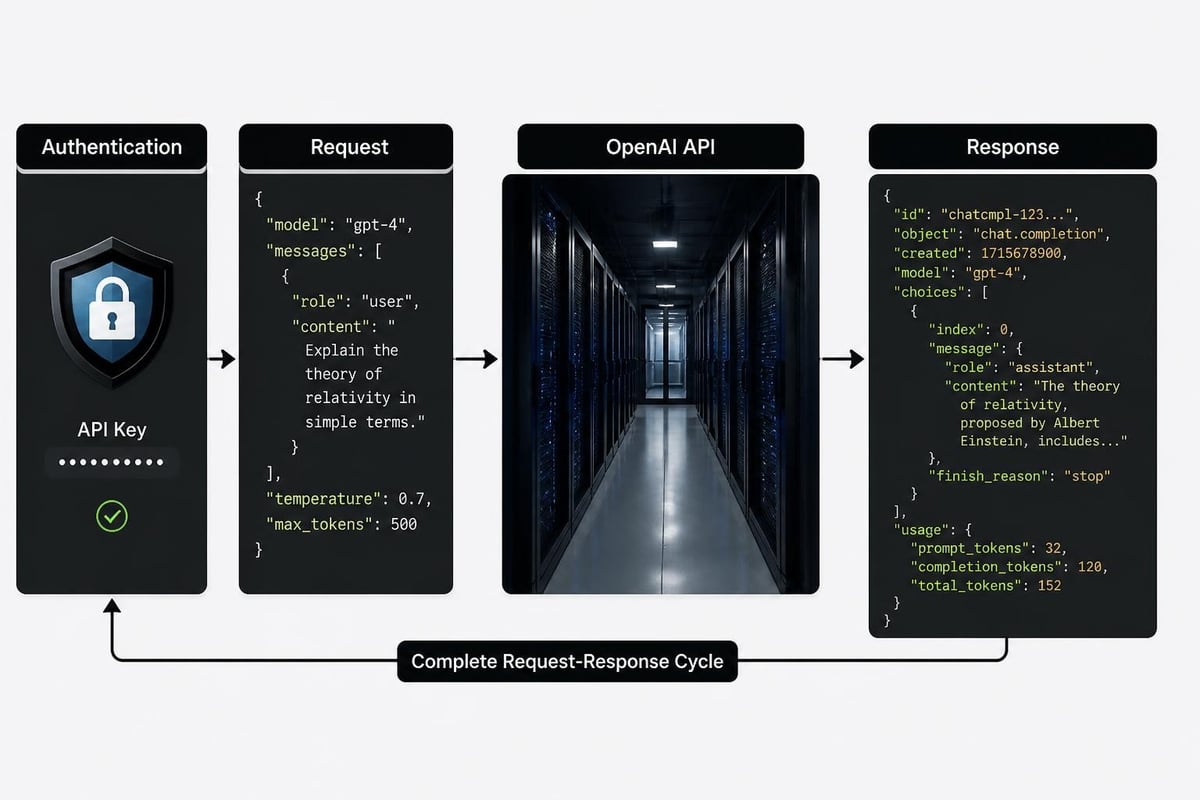
When you work with the openaiapi, you're essentially sending structured requests to OpenAI's servers and receiving AI-generated responses. The process involves authentication, request formatting, parameter configuration, and response handling. Each interaction consumes tokens, which are charged based on the specific model and usage volume.
Key Components of the API Architecture
The architecture consists of several interconnected elements that work together seamlessly:
- Authentication layer using API keys for secure access control
- Endpoint structure organized by model type and functionality
- Request parameters that control output characteristics and behavior
- Response formats standardized in JSON for easy parsing
- Rate limiting mechanisms to ensure fair usage and system stability
Understanding these components helps developers build robust applications that handle errors gracefully and optimize for cost efficiency. The official documentation for available librariesspecific implementations.
Setting Up Your Development Environment
Getting started with the openaiapi requires careful preparation of your development environment. The setup process varies depending on your programming language, but the fundamental steps remain consistent across platforms.
First, create an account on the OpenAI platform and generate your API credentials. These credentials function as your authentication token for all subsequent API calls. Store these keys securely using environment variables or secret management systems, never hardcoding them directly into your application source code.
Installation and Configuration Steps
- Create your OpenAI account and navigate to the API section
- Generate an API key from your account dashboard
- Install the appropriate SDK for your programming language
- Configure environment variables to store sensitive credentials
- Test your connection with a simple API call
For Python developers, the lightweight wrapper available on PyPI as the openaiapi packageSDK. This package provides simplified methods for common operations while maintaining full compatibility with OpenAI's backend services.
The comprehensive quickstart guideonstrates making your first successful API call. Following this structured approach ensures you avoid common pitfalls that new developers encounter.
Authentication and Security Best Practices
Security considerations should be paramount when working with the openaiapi. API keys grant access to paid resources, and compromised credentials can result in unauthorized usage and unexpected charges.
Implement a multi-layered security approach that protects both your credentials and your users' data. Never expose API keys in client-side code, public repositories, or logs. Use server-side proxies to mediate requests between your frontend and the openaiapi.
Security Checklist for Production Applications
| Security Measure | Implementation Method | Priority Level |
|---|---|---|
| Environment Variables | Store keys in .env files excluded from version control | Critical |
| Request Rate Limiting | Implement application-level throttling | High |
| Input Validation | Sanitize all user inputs before API calls | Critical |
| Response Filtering | Remove sensitive data from logged responses | High |
| Access Control | Use role-based permissions for API access | Medium |
| Monitoring | Track usage patterns and detect anomalies | High |
Regular security audits help identify vulnerabilities before they become exploited. Rotate API keys periodically and immediately revoke any keys that may have been compromised.
Making Your First API Request
The process of making requests to the openaiapi follows a consistent pattern regardless of complexity. Each request contains a model identifier, input content, and optional parameters that control the output characteristics.
A basic chat completion request includes the model name, an array of messages representing the conversation history, and configuration parameters like temperature and max_tokens. The API processes this request and returns a structured response containing the generated text along with metadata about token usage.
Request Structure and Parameters
Model selection determines capabilities and cost
Messages array provides context and instructions
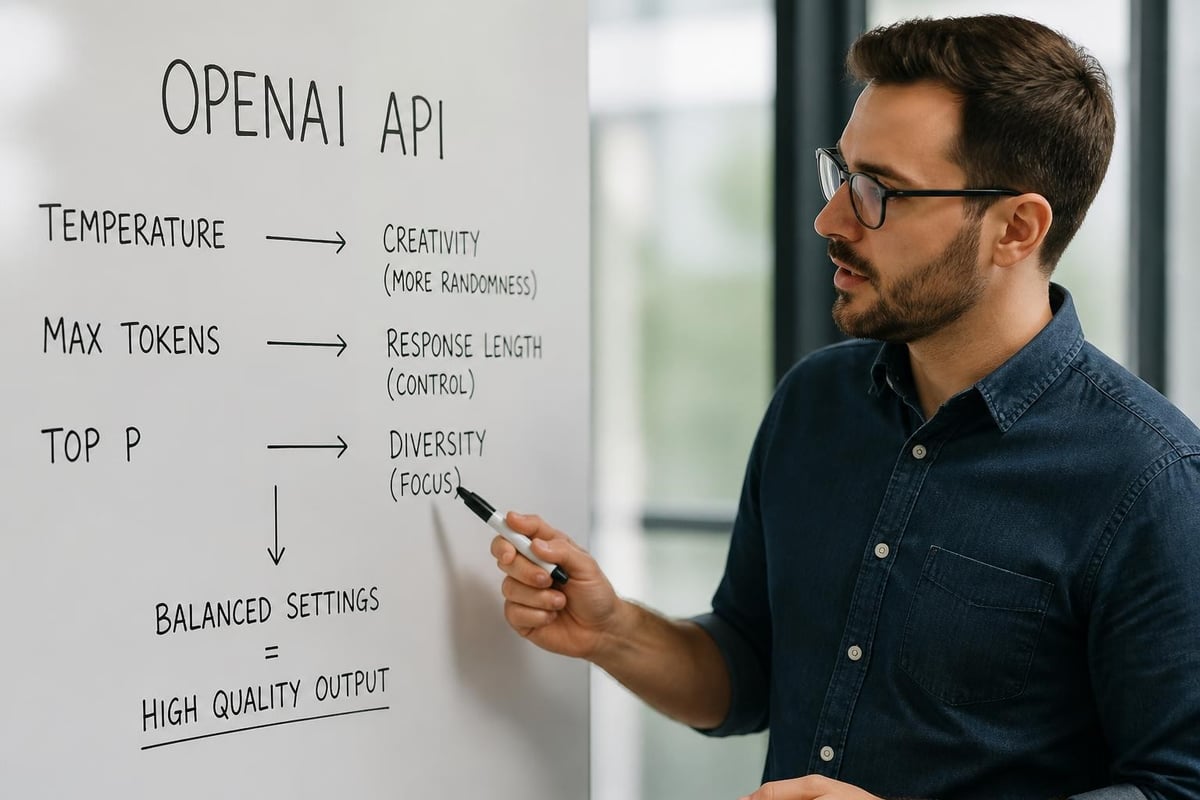
Temperature controls randomness (0.0 to 2.0)
Max tokens limits response length
Top_p influences diversity of word choices
Understanding parameter interactions helps optimize both output quality and cost efficiency. Lower temperature values produce more deterministic outputs, while higher values increase creativity and variation. The max_tokens parameter directly impacts pricing, making it essential to set appropriate limits based on your use case.
Advanced Integration Techniques
Professional applications require sophisticated approaches beyond basic API calls. Implementing retry logic, caching strategies, and context management significantly improves application reliability and user experience.
Context window management becomes particularly important when building conversational applications. The openaiapi has token limits for each model, requiring careful consideration of conversation history length. Implement sliding window techniques or summarization strategies to maintain relevant context while staying within constraints.
Optimization Strategies for Production Systems
Caching frequently requested completions reduces both latency and costs. Implement a caching layer that stores responses for identical requests, serving them directly without making redundant API calls. This approach works particularly well for applications with predictable patterns or common queries.
Asynchronous request handling improves application responsiveness by preventing blocking operations. Use promise-based or callback-based architectures to handle multiple concurrent requests efficiently. This becomes especially important when processing batch operations or serving multiple users simultaneously.
Error handling deserves special attention in production environments. The openaiapi can return various error types including rate limit errors, invalid request errors, and service unavailability. Implement exponential backoff retry logic for transient failures while providing meaningful feedback to users.
Building Practical Business Applications
The openaiapi enables diverse business applications across industries. Content generation, customer service automation, data analysis, and code assistance represent just a few possibilities available to organizations.
Customer service chatbots built with the openaiapi can understand context, provide accurate responses, and escalate complex issues to human agents when appropriate. These systems handle routine inquiries automatically, freeing human staff to focus on situations requiring empathy and judgment. For businesses exploring AI applications in specialized sectors, understanding conversational AI use cases in real estate
Use Case Implementation Examples
| Application Type | Primary Benefit | Technical Consideration |
|---|---|---|
| Content Generation | Scale content production | Maintain brand voice consistency |
| Code Assistant | Accelerate development | Verify generated code security |
| Data Analysis | Extract insights quickly | Validate analytical conclusions |
| Customer Support | Reduce response times | Monitor answer accuracy |
| Document Processing | Automate information extraction | Handle formatting variations |
Each application type requires domain-specific customization. Fine-tuning prompts, implementing validation layers, and creating feedback loops ensures outputs meet business requirements and quality standards.
Cost Management and Optimization
Understanding the pricing structure of the openaiapi helps organizations budget effectively and optimize usage patterns. Different models carry different costs per token, with more advanced models commanding premium prices.
Monitor token consumption carefully across your application. Input tokens and output tokens are both counted toward usage, with some models charging different rates for each. Implementing token counting before requests helps predict costs and prevent budget overruns.
Prompt engineering significantly impacts cost efficiency. Concise, well-structured prompts produce better results with fewer tokens. Avoid redundant context, use clear instructions, and specify desired output length to minimize unnecessary token usage.
- Use smaller models when complex reasoning isn't required
- Implement prompt templates for consistent, optimized requests
- Cache common responses to avoid repeated identical calls
- Set conservative max_token limits appropriate to each use case
- Monitor usage patterns to identify optimization opportunities
The detailed openaiapi documentationethods and cost calculation formulas for different model configurations.
Training Data and Synthetic Datasets
Organizations building specialized applications often need custom training data. While the openaiapi doesn't support direct model fine-tuning for all use cases, it can generate synthetic training data for downstream tasks.
Creating high-quality synthetic datasetseering and validation. Generate diverse examples that represent real-world scenarios while maintaining data quality standards. This approach proves particularly valuable when privacy concerns limit access to real user data.
Synthetic data generation helps test edge cases, expand limited datasets, and create balanced training sets. Combine AI-generated examples with human review to ensure accuracy and appropriateness for your specific domain.

Monitoring and Performance Optimization
Production systems require comprehensive monitoring to ensure reliability and performance. Track key metrics including response latency, error rates, token consumption, and user satisfaction scores.
Implement logging strategies that capture sufficient detail for debugging without exposing sensitive information. Log request parameters, response metadata, and error conditions while redacting user content and API keys.
Key Performance Indicators to Monitor
Response time directly impacts user experience. Set target latency thresholds and alert when performance degrades. Network conditions, API server load, and request complexity all influence response times.
Success rates indicate overall system health. Track the percentage of requests that complete successfully versus those that fail or timeout. Investigate patterns in failures to identify systemic issues requiring architectural changes.
Token efficiency measures how effectively your application uses available context. Calculate the ratio of useful output tokens to total tokens consumed. High ratios indicate well-optimized prompts and appropriate parameter settings.
Integration with Existing Business Systems
The openaiapi excels when integrated thoughtfully into existing business workflows. API-first design enables connections with CRM systems, content management platforms, analytics tools, and custom business applications.
RESTful architecture makes the openaiapi compatible with virtually any modern software stack. Whether you're working with cloud-native applications, legacy systems, or hybrid environments, standard HTTP protocols facilitate integration.
Middleware layers can transform data between your business systems and the openaiapi format requirements. These adapters handle authentication, format conversion, error translation, and response mapping, creating seamless experiences for end users.
Building effective AI integrations requires understanding both the technical capabilities and business processes. The AI learning resources at Andrew J. Pylentegration opportunities and implementation strategies.
Handling Common Challenges and Troubleshooting
Developers working with the openaiapi encounter predictable challenges that require systematic approaches to resolve. Rate limiting, context length errors, and inconsistent outputs represent the most frequent issues.
Rate limit errors occur when applications exceed allowed requests per minute. Implement exponential backoff with jitter to automatically retry failed requests after appropriate delays. Track your usage against published limits and scale your rate limiting logic accordingly.
Context length errors happen when combined input and requested output tokens exceed model maximums. Implement token counting before requests and truncate conversation history intelligently. Prioritize recent context while preserving essential information from earlier interactions.
Troubleshooting Decision Tree
- Error occurs during API call
- Check authentication credentials and API key validity
- Verify network connectivity and firewall settings
- Review request format against documentation standards
- Response quality issues
- Refine prompt clarity and specificity
- Adjust temperature and other generation parameters
- Provide additional context or examples
- Performance problems
- Analyze token usage patterns for optimization opportunities
- Implement caching for repeated requests
- Consider using smaller models for simpler tasks
Documentation quality significantly impacts troubleshooting effectiveness. Research on detecting API documentation issuesrs face and strategies for improving documentation usability.
Future Developments and Staying Current
The AI landscape evolves rapidly, with new models, features, and capabilities released regularly. Staying informed about openaiapi updates ensures your applications leverage the latest improvements and maintain compatibility with platform changes.
Subscribe to official changelog notifications and developer communications. Test new features in staging environments before deploying to production. Maintain flexible architectures that accommodate API changes without requiring complete application rewrites.
Emerging capabilities like function calling, vision understanding, and improved context windows expand possibilities for business applications. Evaluate new features systematically against business requirements and user needs rather than adopting technology purely for novelty.
The community surrounding the openaiapi provides valuable resources for learning and troubleshooting. Engage with developer forums, attend technical conferences, and contribute to open-source projects that extend API functionality.
YouTube Video
Ethical Considerations and Responsible Use
Organizations deploying the openaiapi must consider ethical implications and implement responsible AI practices. Generated content should be monitored for bias, accuracy, and appropriateness.
Transparency about AI involvement helps maintain user trust. Clearly disclose when content is AI-generated rather than human-created. Implement human review processes for high-stakes applications where errors could cause significant harm.
Data privacy deserves careful attention when integrating the openaiapi into business systems. Understand how OpenAI handles submitted data, implement appropriate consent mechanisms, and comply with relevant privacy regulations.
Content moderation helps prevent inappropriate outputs from reaching users. The openaiapi includes built-in safety measures, but applications should implement additional filtering appropriate to their specific use cases and audiences.
Mastering the openaiapi opens tremendous opportunities for businesses seeking to leverage artificial intelligence effectively. By following the implementation strategies, optimization techniques, and best practices outlined in this guide, you can build robust applications that deliver genuine business value. Ready to deepen your understanding of AI integration and unlock practical applications for your organization? Andrew J. Pylerning resources, hands-on examples, and actionable insights that make complex AI concepts accessible and immediately applicable to real business challenges.