Open AI ChatGP: Essential Guide for Business Leaders
By Andrew Pyle

The conversational AI landscape has transformed dramatically since the introduction of advanced language models, and open ai chatgp represents a significant milestone in this evolution. As businesses increasingly seek to leverage artificial intelligence for competitive advantage, understanding the capabilities, limitations, and practical applications of these systems becomes essential. This comprehensive guide examines how professionals can effectively integrate conversational AI into their workflows, making informed decisions about adoption and implementation.
Understanding Open AI ChatGP Technology
Open ai chatgp operates on transformer-based architecture, utilizing neural networks trained on vast amounts of text data to generate human-like responses. The underlying technology processes natural language inputs and produces contextually relevant outputs through pattern recognition and probability calculations.
Core Architecture Components
The foundation of open ai chatgp relies on several interconnected systems working simultaneously:
- Token processing: Converting text into numerical representations that neural networks can interpret
- Attention mechanisms: Identifying relationships between different parts of input text
- Layer processing: Multiple transformation stages that refine understanding and generation
- Output generation: Probability-based selection of words and phrases to form coherent responses
These components work together to create conversational experiences that feel natural and responsive. According to research on conversational response generation modelses unprecedented context awareness in dialogue systems.
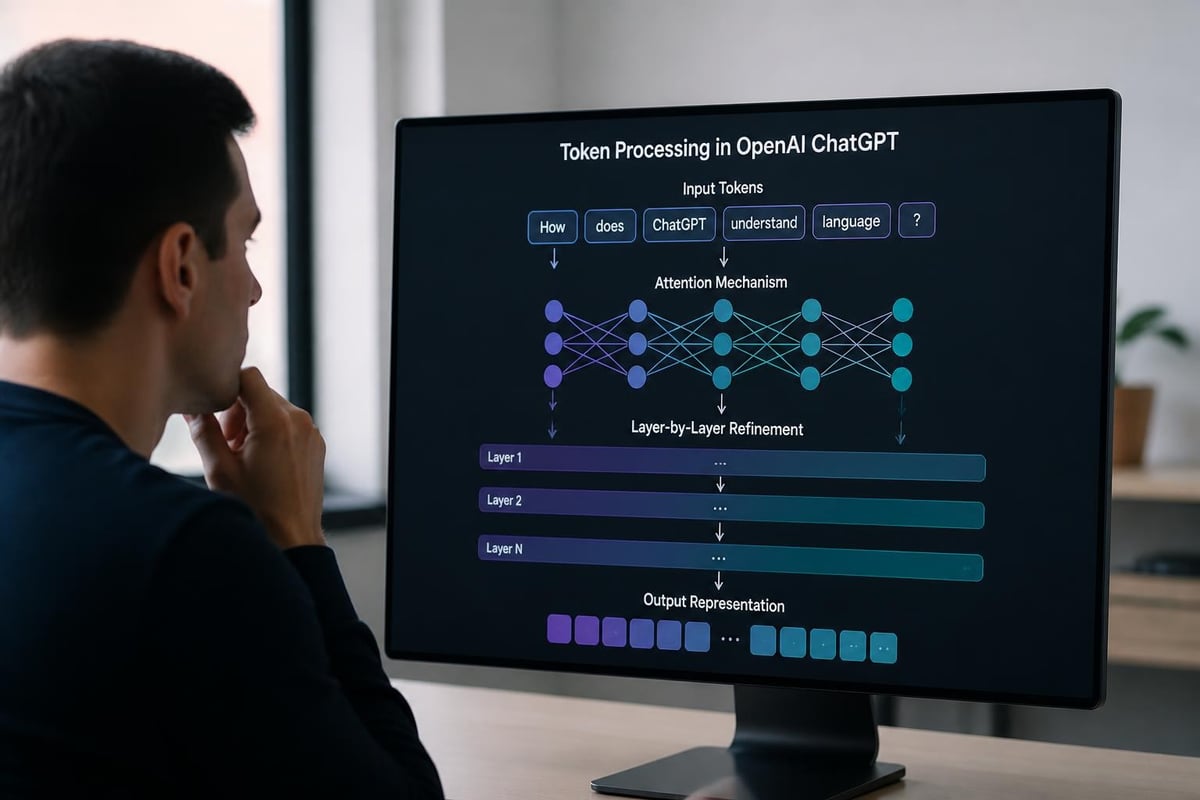
The training process involves exposing the model to diverse text sources, allowing it to learn patterns, grammar, factual relationships, and conversational norms. This extensive training enables open ai chatgp to handle a wide range of tasks from simple question answering to complex problem-solving scenarios.
Business Applications and Use Cases
Professionals across industries are discovering practical ways to integrate open ai chatgp into their daily operations. The versatility of conversational AI creates opportunities for efficiency gains, enhanced creativity, and improved decision-making processes.
Content Creation and Marketing
Marketing teams leverage open ai chatgp for multiple content-related tasks:
- Drafting initial content outlines that structure blog posts, reports, and presentations
- Generating multiple headline variations for A/B testing and optimization
- Creating personalized email templates based on customer segments
- Developing social media content calendars with platform-specific messaging
- Producing product descriptions that highlight key features and benefits
The Andrew J. Pyle platform emphasizes practical AI applicationst immediately, transforming theoretical knowledge into measurable results.
Customer Service Enhancement
Organizations are reimagining customer support through conversational AI integration:
| Application Area | Traditional Approach | With Open AI ChatGP |
|---|---|---|
| Response Time | 2-24 hours | Immediate |
| Availability | Business hours only | 24/7 coverage |
| Query Handling | Limited by staff size | Unlimited concurrent conversations |
| Consistency | Varies by representative | Standardized responses |
The shift toward AI-assisted customer service doesn't eliminate human involvement but rather augments it, allowing staff to focus on complex issues requiring empathy and nuanced judgment. Studies examining knowledge-grounded conversationstain context across extended interactions.
Research and Analysis Support
Researchers and analysts utilize open ai chatgp to accelerate information gathering and synthesis:
- Summarizing lengthy documents into key insights and actionable points
- Identifying patterns across multiple data sources and reports
- Generating research questions and hypotheses for further investigation
- Translating technical concepts into accessible language for stakeholders
- Creating structured frameworks for complex problem analysis
These applications become particularly valuable when professionals need to process large volumes of information quickly while maintaining accuracy and comprehension.
Implementation Strategies for Organizations
Successfully integrating open ai chatgp requires thoughtful planning and strategic execution. Organizations that approach implementation systematically achieve better outcomes and higher adoption rates among team members.
Assessing Organizational Readiness
Before deploying conversational AI tools, evaluate your organization across several dimensions:
Technical infrastructure: Ensure adequate internet connectivity, device capabilities, and security protocols that support AI tool usage without compromising data protection.
Team capabilities: Assess current digital literacy levels and identify training needs specific to AI interaction and prompt engineering.
Process alignment: Map existing workflows to determine where open ai chatgp can add value without disrupting established procedures that function effectively.
The AI Atlas resourceor evaluating organizational AI readiness across multiple dimensions.
Training and Adoption Programs
Effective training programs accelerate adoption and maximize return on investment:
- Foundation workshops covering basic interaction principles and prompt structure
- Use-case specific training tailored to department needs and workflows
- Hands-on practice sessions with real business scenarios and challenges
- Ongoing support structures including internal champions and feedback channels
- Performance measurement tracking efficiency gains and quality improvements
Organizations that invest in comprehensive training programs report significantly higher satisfaction rates and more creative applications of the technology.

Quality Control and Governance
Establishing clear guidelines ensures responsible and effective use:
| Governance Area | Key Considerations | Implementation Approach |
|---|---|---|
| Output Verification | Accuracy checking, fact validation | Multi-step review processes |
| Data Privacy | Information handling, confidentiality | Clear usage policies, access controls |
| Ethical Use | Bias awareness, transparency | Regular audits, ethical guidelines |
| Performance Monitoring | Quality metrics, user feedback | Dashboard tracking, surveys |
Research comparing open-source language models to proprietary systemsance frameworks regardless of the specific technology chosen.
Optimizing Results Through Effective Prompting
The quality of outputs from open ai chatgp directly correlates with prompt quality. Mastering prompt engineering transforms basic tool usage into strategic capability that delivers consistent, high-value results.
Prompt Structure Principles
Well-constructed prompts share common characteristics:
- Clarity: Specific, unambiguous instructions that eliminate confusion
- Context: Relevant background information that shapes appropriate responses
- Constraints: Parameters defining scope, length, tone, and format
- Examples: Sample outputs demonstrating desired quality and style
When crafting prompts, consider the task complexity and desired output format. Simple information retrieval requires different structuring than creative ideation or analytical reasoning tasks.
Advanced Techniques for Complex Tasks
Professional users develop sophisticated prompting strategies:
Chain-of-thought prompting: Requesting step-by-step reasoning that makes the logic transparent and verifiable, particularly valuable for analytical tasks requiring explanation.
Role-based framing: Instructing open ai chatgp to adopt specific perspectives (consultant, analyst, educator) that align with desired output characteristics and expertise levels.
Iterative refinement: Building on initial responses through follow-up prompts that narrow focus, add detail, or shift direction based on intermediate results.
Common Pitfalls and Solutions
Even experienced users encounter challenges with open ai chatgp:
Vague requests produce generic responses lacking specificity or actionable value. Solution: Add concrete details about audience, purpose, and desired outcomes.
Context overload confuses the system with excessive background information. Solution: Focus on essential context directly relevant to the immediate task.
Assumption of knowledge expecting the system to understand unstated preferences or organizational specifics. Solution: Explicitly state requirements, standards, and expectations.
Understanding these patterns accelerates skill development and improves output quality across diverse applications.
Integration with Existing Business Systems
Organizations maximizing value from open ai chatgp connect it seamlessly with existing technology infrastructure and workflows. Strategic integration amplifies capabilities beyond standalone usage.
API Integration Approaches
Technical teams implement programmatic access through several methods:
- Direct API calls embedding conversational AI into custom applications
- Workflow automation platforms connecting open ai chatgp with other business tools
- Plugin architectures extending existing software capabilities with AI features
- Custom interfaces building department-specific access points with tailored functionality
These integration patterns enable automatic processing, scheduled tasks, and event-triggered responses that operate without manual intervention.
Data Pipeline Considerations
Effective integration requires attention to data flow:
- Input sanitization: Cleaning and formatting data before sending to open ai chatgp
- Output validation: Verifying responses meet quality standards and business rules
- Error handling: Managing system failures and unexpected responses gracefully
- Performance optimization: Balancing response quality with processing speed requirements
Organizations exploring conversational AI applicationssiderations early in the planning process.

Security and Compliance Requirements
Enterprise deployment demands robust security measures:
Access controls: Role-based permissions determining who can use open ai chatgp and for what purposes, protecting sensitive operations and data.
Audit logging: Comprehensive tracking of interactions, inputs, and outputs enabling accountability and compliance verification.
Data retention policies: Clear guidelines about storage duration, archival procedures, and deletion protocols aligned with regulatory requirements.
Industry-specific regulations may impose additional requirements beyond standard security practices, particularly in healthcare, finance, and legal sectors.
Measuring Impact and ROI
Quantifying the value of open ai chatgp implementation requires establishing clear metrics and measurement frameworks that capture both tangible and intangible benefits.
Quantitative Performance Indicators
Track measurable outcomes across key dimensions:
| Metric Category | Example Measurements | Target Improvements |
|---|---|---|
| Time Efficiency | Hours saved per week per employee | 20-40% reduction in task time |
| Output Volume | Documents, responses, analyses produced | 50-100% increase in throughput |
| Cost Reduction | Labor hours, outsourcing expenses | 15-30% decrease in operational costs |
| Quality Metrics | Accuracy rates, revision requirements | 10-25% improvement in first-draft quality |
Organizations should establish baseline measurements before implementation to accurately assess improvements and validate investment decisions.
Qualitative Value Assessment
Beyond numbers, consider experiential improvements:
- Employee satisfaction: Reduced tedious work, more time for creative tasks
- Innovation capacity: Faster ideation, more experimental approaches
- Decision quality: Better-informed choices supported by rapid analysis
- Competitive positioning: Enhanced responsiveness to market changes
The comprehensive AI learning resourceslop holistic evaluation frameworks that capture both quantitative and qualitative dimensions.
Continuous Improvement Cycles
Successful organizations treat open ai chatgp implementation as an evolving capability:
- Regular usage reviews identifying effective practices and problem areas
- Prompt library development capturing and sharing high-performing templates
- Training updates incorporating new features and advanced techniques
- Feedback integration adapting approaches based on user experience
- Benchmark comparisons tracking progress against internal and external standards
This iterative approach ensures ongoing optimization and prevents stagnation as both the technology and organizational needs evolve.
Future Developments and Strategic Considerations
The conversational AI landscape continues evolving rapidly, with implications for long-term strategic planning and investment decisions. Forward-thinking organizations prepare for emerging capabilities while maximizing current tool value.
Emerging Capabilities on the Horizon
Several development areas show particular promise:
Multimodal integration: Combining text, images, audio, and video in unified conversational experiences that mirror human communication patterns more closely.
Specialized domain models: Industry-specific versions of open ai chatgp trained on sector-relevant data delivering higher accuracy for specialized tasks.
Enhanced reasoning capabilities: Improved logical inference, mathematical problem-solving, and complex analytical tasks through architectural innovations.
Real-time learning: Systems that adapt based on user feedback and organizational context without requiring complete retraining.
Research on embodied AI platformsems may integrate with physical environments and robotics applications.
Building Adaptive Strategies
Organizations should develop flexible approaches:
- Vendor diversification: Avoiding over-reliance on single providers by maintaining capabilities across platforms
- Skill development investment: Building internal expertise that transfers across different AI systems
- Modular architecture: Designing integrations that accommodate technology substitution
- Continuous monitoring: Tracking competitive landscape and emerging alternatives
The AI company landscapers and the importance of strategic positioning.
Ethical and Societal Considerations
Responsible adoption addresses broader implications:
Workforce transition support: Helping employees adapt to changing roles and skill requirements as AI handles routine tasks.
Bias mitigation: Actively identifying and addressing potential prejudices in outputs that could perpetuate systemic inequities.
Transparency practices: Clear communication about AI usage in customer-facing applications and decision-making processes.
Environmental impact: Considering energy consumption and carbon footprint of AI operations in sustainability planning.
Studies examining terminology development around conversational AIse technologies in society.
Selecting the Right Tools and Platforms
With multiple options available, professionals need frameworks for evaluating and selecting conversational AI tools that align with their specific needs and organizational contexts.
Evaluation Criteria Framework
Assess potential solutions across multiple dimensions:
Capability alignment: Match between tool features and your specific use cases, workflows, and business requirements.
Integration potential: Technical compatibility with existing systems, APIs, and data infrastructure already in place.
Cost structure: Pricing models, scaling economics, and total cost of ownership including training and support.
Vendor stability: Provider track record, financial health, and long-term viability in the competitive marketplace.
Support ecosystem: Documentation quality, community resources, and professional services availability for implementation assistance.
The AI tools directoryorganizations navigate the selection process with confidence.
Platform-Specific Considerations
Different platforms serve distinct needs:
- General-purpose solutions like open ai chatgp: Versatile applications across diverse business functions
- Industry-specific tools: Optimized for particular sectors with specialized knowledge and compliance features
- Enterprise platforms: Enhanced security, governance, and integration capabilities for large organizations
- Developer-focused options: Maximum customization and control for technical teams building custom solutions
Understanding your primary use cases and technical capabilities guides appropriate platform selection decisions.
Trial and Pilot Programs
Before full-scale deployment, conduct structured testing:
- Define success criteria establishing clear benchmarks for evaluation
- Select representative use cases covering diverse applications and user groups
- Implement limited rollout with controlled scope and participant selection
- Gather structured feedback through surveys, interviews, and usage analytics
- Analyze results comprehensively comparing outcomes against established criteria
Pilot programs reduce risk and provide valuable insights that inform broader implementation strategies.
Understanding and effectively implementing open ai chatgp requires both theoretical knowledge and practical experience, transforming powerful technology into tangible business value. As conversational AI continues evolving, staying informed about capabilities, best practices, and emerging applications positions organizations for competitive advantage. Andrew J. Pyle learning resources, hands-on examples, and actionable insights professionals need to confidently adopt and apply artificial intelligence in their work, making complex AI concepts accessible through clear explanations and practical guidance.